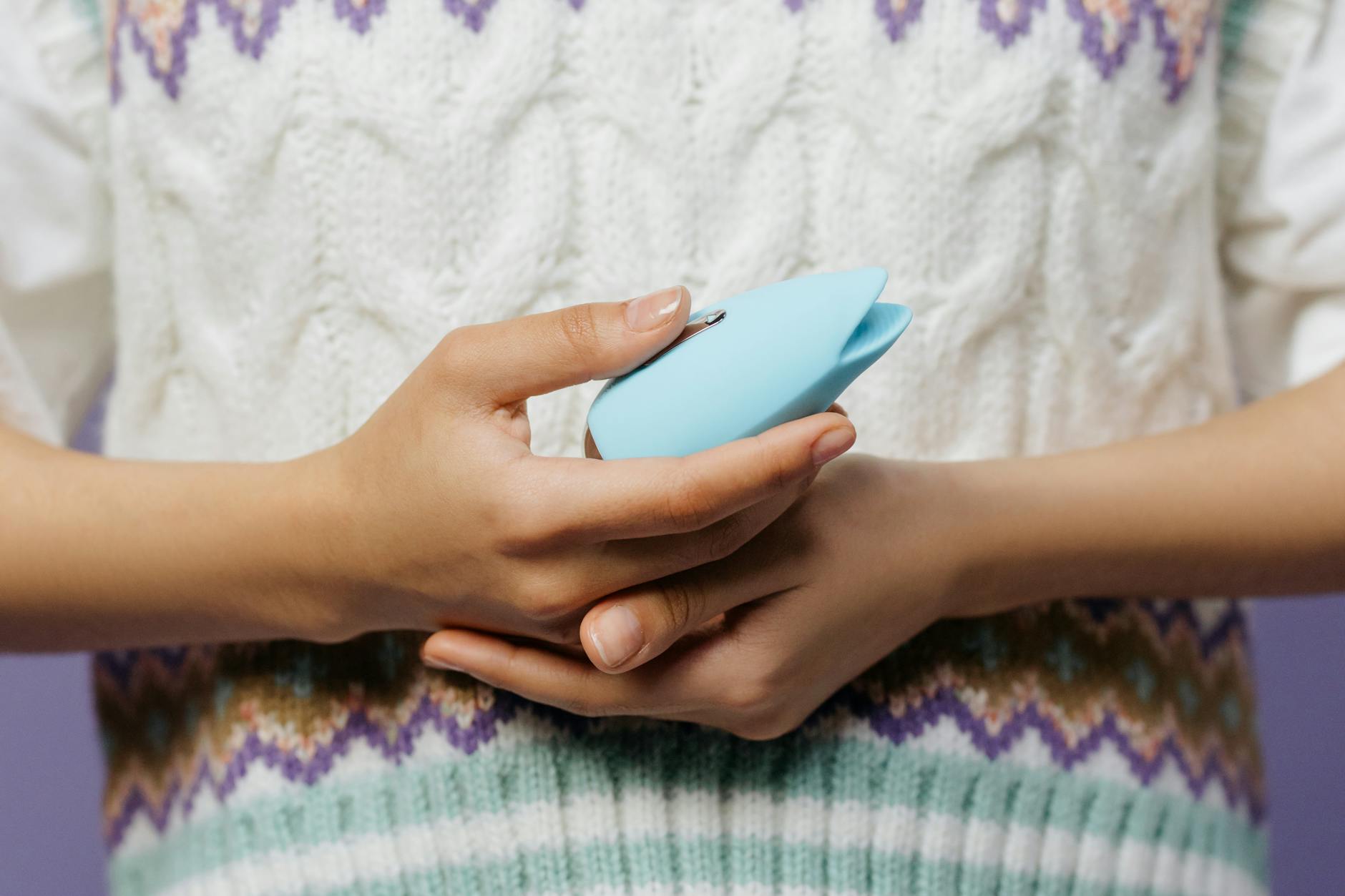
How Lemon Vibrators Help When Recovery From Childbirth Affects Intimacy
Your body survived something massive. Your desire didn't disappear, but it might feel buried under exhaustion, soreness, and a version of yourself you don't quite recognize yet. Here's what's actually happening and how to rebuild pleasure on your timeline.
Let's start with honesty. After childbirth, your genitals are swollen, potentially stitched, definitely tender. Your hormones are in freefall. You're bleeding, leaking, wearing pads the size of a pillow. You haven't slept longer than two hours at a time in weeks. Your nipples hurt. Your brain is flooded with cortisol and oxytocin in quantities that make focus feel impossible.
In this context, wanting sex feels like a luxury from another lifetime.
Here's what's actually happening: it's not that your capacity for pleasure has vanished. It's that every single system required to access that capacity is temporarily offline. And everyone around you, often including your partner, is waiting for you to "get back to normal" without acknowledging that normal doesn't exist right now.
Three major shifts happen postpartum, and none of them are straightforward.
Vaginal and vulvar tissue takes a real beating. Whether you had a vaginal delivery or a C-section, the surrounding tissues are inflamed. If you tore or had an episiotomy, you're healing from an actual wound. The tissue is more sensitive and fragile right now. Traditional vibrators, which work through repetitive friction, can feel too intense. Many postpartum people describe them as feeling raw or overstimulating.
Hormones crater. Estrogen drops rapidly after birth. This is different from the gradual decline in menopause. The speed of the shift is what makes it so disorienting. Your body temperature fluctuates wildly. Your skin feels weird to touch. Your lubrication dries up while you're healing from delivery. This combination makes arousal feel physically impossible, even if mentally you want it.
Your pelvic floor is stretched and traumatized. The pelvic floor muscles work overtime during labor and delivery. Many people describe sensation as muted or, conversely, as uncomfortable tension in the pelvic bowl. Orgasm might feel different. It might feel weaker, or it might not feel like it arrives at all. This is temporary, but temporary doesn't make it less confusing.
Here's the part nobody tells you: the body trauma is the smaller problem.
You've been touched constantly by an infant. By doctors. By partners. By everyone. Your body stopped being yours the moment that baby arrived. The idea of intentional, pleasurable touch can feel like one more demand, one more thing you owe someone, one more violation of a body that's already been through a war.
Postpartum depression and anxiety also genuinely affect arousal. So does resentment. If your partner wasn't present for labor, or if they're not waking up for night feeds while you are, or if they're pressuring you for sex before you're physically healed, that anger lives in your body. It closes the door to pleasure.
Most postpartum people I work with need permission to stop performing intimacy for their partner and to start exploring what pleasure feels like for themselves, in isolation, without expectation.
That permission is harder to give yourself than it sounds.
Traditional vibrators work through rapid friction. They're designed to overwhelm the clitoris into submission. After childbirth, your tissue is tender and your nervous system is already overwhelmed. You don't need more stimulation. You need the right kind.
Lemon clitoral vibrators, which use air-suction technology, work differently. Instead of friction, they create a gentle vacuum seal around the clitoris. The stimulation is broad and gentle rather than sharp and direct. The pattern of stimulation mimics the sensation of oral sex, which feels less invasive to healing tissue.
Most importantly, air-suction doesn't require your body to be lubricated. That matters enormously postpartum, when lubrication is practically nonexistent and your vaginal tissue is too sensitive for anything that requires it.
Clients report that a lemon vibrator is the first thing that's felt actually good on their body since delivery. Not obligatory. Not like a performance. Good. That distinction is worth paying attention to.
If you're cleared for penetration by your OB (usually around six weeks, sometimes longer), that doesn't mean you're ready for partnered sex. And it definitely doesn't mean you're ready for solo exploration with a toy. Listen to your body, not the calendar.
When you do feel ready, here's what actually helps:
Start clothed. Sit fully clothed, on top of a lemon vibrator. Let your body get used to the sensation of stimulation through fabric. No pressure to feel anything. The goal is to rebuild the neural pathway between sensation and pleasure. Your brain has been in survival mode. It needs time to remember that good feelings exist.
Use the lowest setting. Even the gentlest suction on a lemon vibrator can feel intense if your nervous system is dysregulated. Start on the lowest pattern. Build gradually. You can always turn it up. You can't un-feel overstimulation.
Do this alone, unrushed. No partner watching. No goal of orgasm. Just fifteen minutes of gentle attention to your own body. This is where the pleasure rebuild actually starts. Not with a partner. With yourself.
Expect nothing, notice everything. Your body might not respond. That's not failure. Postpartum, your nervous system is often in a sympathetic state (fight or flight) rather than a parasympathetic state (rest and digest). Pleasure requires parasympathetic activation. Notice what helps: dimmed lights, a locked door, a partner handling evening bottles, a sound machine, your favorite song playing.
Most postpartum resentment about sex happens because partners frame the issue as "when can we have sex again" rather than "how can we rebuild intimacy in a way that doesn't feel like obligation."
If you're working with a partner, the conversation needs to separate two things: your physical recovery and your emotional openness to being touched. These are not the same timeline. You might feel physically ready before you feel emotionally available. Or you might feel emotionally available but your body is still healing.
A tool like a lemon vibrator can actually make this conversation easier. Instead of "I don't want sex yet," you can say "I want to rebuild pleasure on my own terms first." That's different. It's not a rejection. It's a path forward that doesn't include your partner for a little while.
Most partners actually prefer this to months of feeling rejected.
Postpartum recovery is not linear. You might feel ready one day and completely touched out the next. You might orgasm easily one week and feel absolutely nothing the next. This is normal. Hormones are still stabilizing. Your nervous system is learning a new baseline.
The permission part is the part that actually heals the breach between your body and pleasure. You get to be the one deciding when touching your own body feels good again. You get to say no to your partner. You get to go slow. You get to use tools that make the experience comfortable instead of painful.
FOR lemon vibrators and other designs that don't require deep arousal to feel good, postpartum bodies often find pleasure faster than they expect. Not because the toy is magic, but because the design respects what a postpartum body actually needs right now.
Physically, you can use air-suction toys as soon as your bleeding has significantly reduced and any visible tears or stitches have healed. That's usually around four to six weeks postpartum. Emotionally, you can use it whenever you want. Many postpartum people benefit from solo exploration with toys before they feel ready for partnered sex. There's no rush. If you're not ready at six weeks, that's completely normal.
If you have active stitches, you should wait. But once stitches are removed and the area is visibly healed, many people find that air-suction technology is gentler than traditional vibrators. The stimulation is broad and distributed rather than direct. That said, every body heals differently. If it hurts, stop. Discomfort is information.
Once active bleeding has slowed to spotting, yes. The gentleness of air-suction makes it manageable even with light bleeding. Wear a dark color and use a towel if you want to manage mess. That said, many postpartum people feel too touched out during heavy bleeding to want any stimulation. Trust what your body is telling you.
Yes. If you're experiencing postpartum depression or anxiety, your nervous system is dysregulated. Pleasure requires a calm nervous system. Toys won't fix that. You need support from a healthcare provider first. Once you're stabilizing with treatment, toys like lemon vibrators can help rebuild connection to pleasure. Pleasure is part of healing, not a substitute for it.
That guilt is worth examining. You don't owe your partner access to your body while you're recovering from a massive physical event. Rebuilding your own capacity for pleasure is not selfish. It's actually the thing that makes partnered intimacy possible later. Your pleasure matters. Your healing timeline matters. Your body matters. Not as an object for your partner to access, but as yours.
If sex is still painful beyond three months postpartum, that's worth discussing with your OB. You might have pelvic floor dysfunction, scar tissue tension, or ongoing hormonal shifts. A lemon vibrator can be part of gradual rebuilding, but pain that persists needs professional evaluation. You're not broken. You might just need targeted physical therapy or hormonal support.
Your body survived childbirth. It deserves pleasure again, on your timeline, in a way that feels safe. Lemon vibrators work for postpartum bodies because they're designed for gentle, broad stimulation that doesn't require you to be in a state of deep arousal to feel good. Start alone. Start slow. Start with low intensity. Let yourself rediscover sensation without obligation.
The rebuild is slower than you probably want it to be. That's not a problem. That's actually how healing works.
If you're struggling with postpartum intimacy, whether it's physical or emotional, reach out. We have resources specifically for rebuilding connection after major life transitions like childbirth.