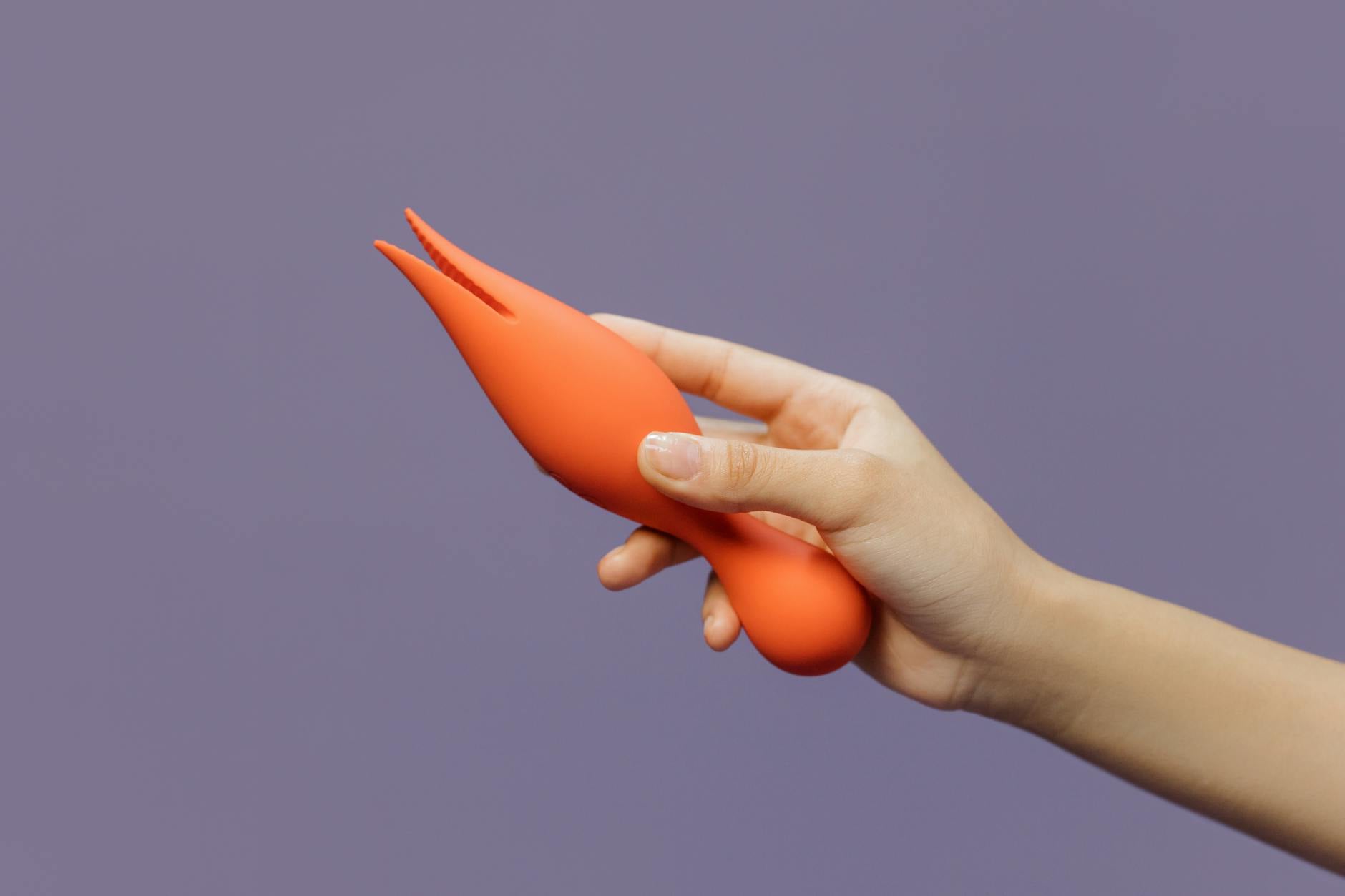
How Lemon Vibrators Help When Sensation Feels Muted During Partner Sex
Your partner is touching you, but you're barely feeling it. Here's why that happens, and how lemon clitoral vibrators can restore the sensation you're missing.
You're in bed with your partner. They're touching you. You know they're touching you. But the sensation is oddly distant, like you're feeling it through a pane of glass. This isn't a relationship problem. It's a nervous system problem. And it's more common than you'd think.
Honestly, this is one of the most frustrating experiences people bring into my therapy office. Because it looks like a desire issue from the outside. But it's not. Your nervous system has gone quiet, and your partner's touch, no matter how deliberate or loving, isn't cutting through the static.
Attention fragmentation. When you're with a partner, your brain is doing a lot of work. You're tracking their pleasure, managing how you look, monitoring whether you're making the right sounds, timing arousal to sync with theirs. That cognitive load drains the bandwidth your nervous system needs to feel stimulation clearly. It's not distraction exactly. It's divided focus, and it kills sensation.
Protective tension. People with vulvas often hold unconscious tension in the pelvic floor during partnered sex, even when things feel relaxed on the surface. This happens from a mix of socialization, past experience, or simply the vulnerability of being watched. That muscular bracing dampens sensation. The muscles that should be receptive are instead contracted.
Pressure and rhythm mismatches. A partner's hand or body can't deliver the precise intensity and rhythm that creates sensation for you. They're guessing, and they're probably applying less pressure than you actually need. Light touch feels like almost nothing. The nerve pathways in your clitoris require a certain stimulus threshold to fire at all.
Lemon clitoral vibrators work where partner touch often fails because they solve all three problems at once.
They remove cognitive load. A vibrator is doing one job: delivering consistent stimulation. You don't have to wonder if it's feeling good for the toy, or worry about reciprocating. That freed-up mental space lets your nervous system focus entirely on sensation. Attention concentrates instead of fragmenting.
They interrupt protective tension. A vibrator's intensity and rhythm are often novel enough to bypass the pelvic floor's habitual bracing. The suction technology in lemon sexual toys specifically creates a rhythmic pulling sensation that the body can't easily brace against. It works around the protection rather than fighting it.
They deliver threshold-crossing stimulation. Lemon vibrators produce the kind of intensity and precision that actually registers. That matters. If you've been feeling muted sensation, trying a lower-intensity toy will just feel like nothing still. A lemon clitoral vibrator cuts through. You'll feel it because it's strong enough and rhythmic enough to cross the stimulus threshold your nervous system needs.
The easiest framing is the most honest one: "I want more sensation in this, and a vibrator helps me feel things more clearly. Can we try it together?"
That's not a referendum on their touch. It's data. They're not replacing anything. They're joining the experience.
Here's the actual choreography that tends to work:
Start with your partner doing what they normally do. After a few minutes, introduce the lemon vibrator. Use it on yourself first. Let your partner watch. Once you're more aroused and your nervous system is more engaged, your partner can touch you in other places (chest, inner thighs, neck, mouth) while you use the vibrator. This combination often works better than either alone.
The vibrator isn't a solo experience anymore. It's a piece of partnered sex. And something shifts. Your partner gets to see you aroused and engaged. You get to feel sensation clearly. And they can feel your body responding to something, which is its own form of feedback.
If you've tried lower-power vibrators and they felt like nothing, that's exactly the problem. Sensation doesn't work on a curve where a little bit of vibration gives you a little bit of sensation. Below a certain threshold, you feel nothing. Once you cross that threshold, sensation snaps into focus.
Lemon vibrators are intentionally designed with enough power and rhythmic variety to cross that threshold. The suction mechanism does something traditional vibration can't: it creates a pulling sensation in addition to stimulation, which engages more nerve pathways. That's why they work when other toys haven't.
You need a lemon clitoral vibrator strong enough to actually reach your nervous system. That's not overkill. That's baseline.
Here's where things get tender. When sensation feels muted, couples often assume it means something's wrong with the relationship. That the attraction has faded. That sex is becoming routine. Sometimes that's true. Often it's just neurological.
But naming it changes something. When you say out loud, "My sensation feels muted, and I need stronger, more consistent stimulation," you're giving your partner information instead of leaving them guessing. You're also claiming your pleasure as something worth troubleshooting, not something you should just accept.
That matters. Because if your partner loves you, they want you to feel things. And when a lemon vibrator is the thing that makes that possible, it becomes part of how you both get closer, not a workaround.
If numbness is new and sudden, check three things: medication side effects (especially antidepressants), hormonal shifts, or emotional disconnection from your partner. Sensation sometimes goes muted when the relationship itself has friction you haven't addressed. A vibrator helps with the physical part. It doesn't fix the relational part.
If you suspect this is emotional, bring it into conversation before assuming you need a stronger toy. Sometimes sensation returns when trust does.
You deserve to feel pleasure clearly during sex. Not halfway. Not through a filter. Clearly. A lemon vibrator isn't a consolation prize. It's a tool that lets your nervous system do what it's designed to do. And when you use it with your partner, it often opens a door that touch alone couldn't open. Sensation returns. Attention sharpens. And partnered sex becomes something you can actually feel again.
Arousal and clear sensation are two different things. You can be mentally turned on and still not feel physical stimulation clearly. This usually happens because of divided attention or protective tension in your pelvic floor. Your body is partially braced, even while your mind is engaged. A vibrator's consistent, intense stimulus can override that bracing and let sensation through.
Partner touch can help, but it has limits. Without a specific rhythm and intensity, most people won't cross the sensory threshold they need. Lemon clitoral vibrators deliver that precision consistently. Your partner's hand is more flexible, but less predictable. Ideally, they work together.
Completely normal. Most people who use lemon sexual toys during partnered sex report stronger orgasms and clearer sensation. It's not a compromise. It's how many couples actually achieve better intimacy. Your partner can be involved and present while you use one. It doesn't mean you're not attracted to them.
That's a relational conversation, not a toy conversation. Your partner's insecurity is worth hearing and addressing separately from your need for sensation. Sometimes the insecurity softens once they see you actually feeling pleasure. Sometimes it requires deeper conversation about what threat they're sensing. Both are valid.
Start small. Don't make it a big announcement. Introduce it during foreplay matter-of-factly. "I want to try using this to see if we can build more intensity." Use it on yourself first while they're involved but not in control. Once you're more aroused, they can touch you elsewhere. Keep it simple. The less ceremony, the more natural it feels.
No. It means your nervous system works a particular way, and this tool aligns with how your body actually responds. That's data, not criticism. Some partners feel relieved when a vibrator works because they've been frustrated trying to figure out what you need. Others need reassurance that the vibrator is complementary, not a replacement. Both feelings are okay to have.