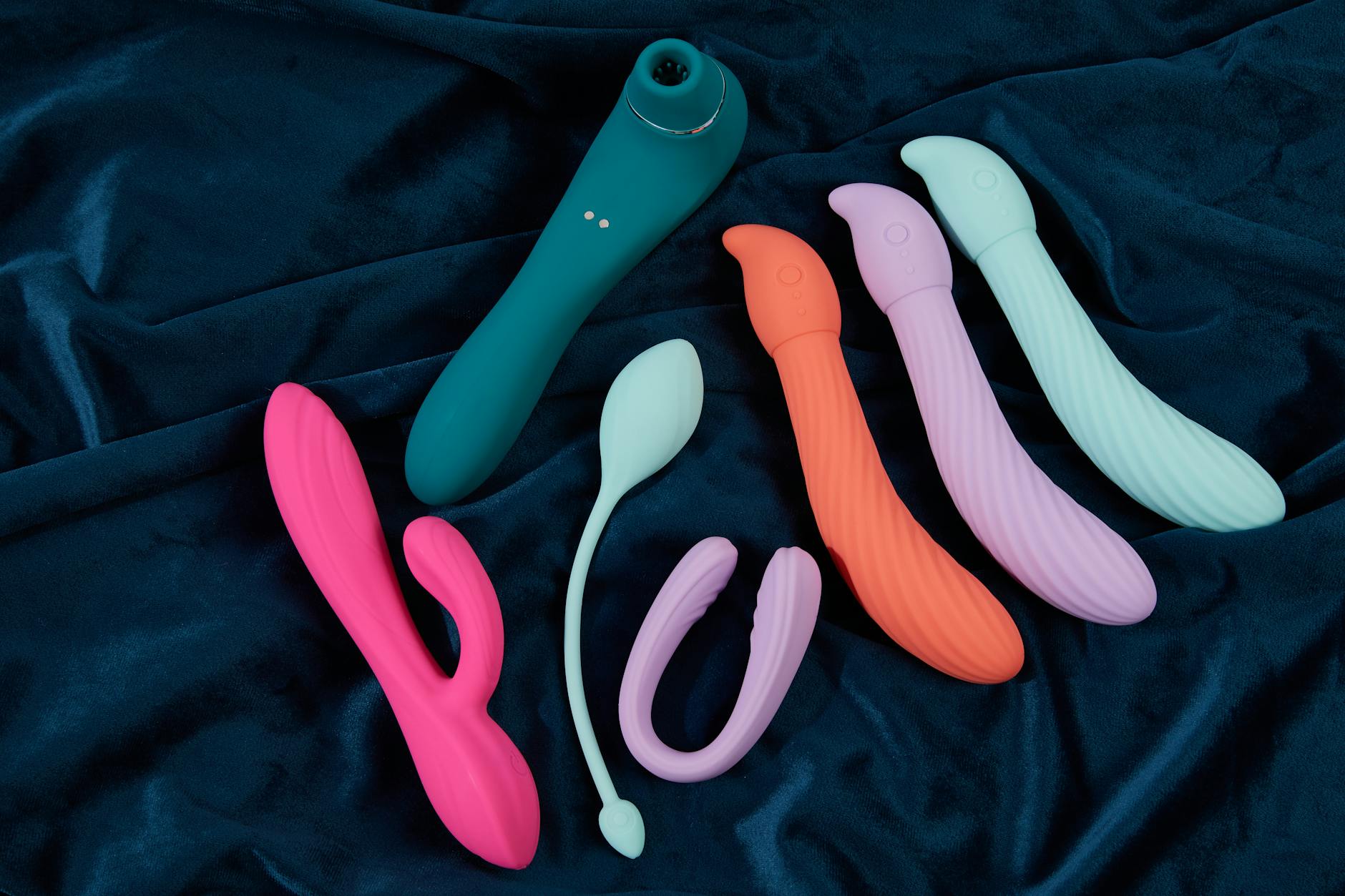
How to Use Lemon Vibrators When Returning to Sex After a Long Break
Your body hasn't forgotten pleasure. But arousal after months or years away works differently. Here's how Hello Nancy's lemon clitoral vibrators bridge the gap.
You're not broken. Your desire didn't vanish. But your body's arousal machinery needs a restart after a pause, and that's not a failure. It's physics.
When sex stops for a long stretch, whether due to illness, grief, relationship rupture, or simple life chaos, your nervous system literally downregulates its responsiveness. Your clitoris still has the same neural density. Your brain still carries arousal capacity. But the signal pathway gets quiet. Adding external stimulation via a lemon clitoral vibrator isn't cheating your way back to pleasure. It's giving your body permission to wake up again.
Here's what nobody tells you: the longer the break, the more psychological noise gets layered on top of the physical piece. You've likely built a story around sex during that pause. "I'm too old now." "My body's different." "My partner won't find me attractive." "I don't even remember how."
None of that is true, but your brain believes it because your body's been silent for so long. That's where a lemon sucker or other Hello Nancy clitoral vibrator becomes genuinely useful. It's not because vibration is magic. It's because external stimulation gives your arousal system permission to activate without waiting for your mind to get out of the way first.
Research on sexual function after long gaps shows that people who use targeted clitoral stimulation to restart their sexual practice report faster return to baseline arousal, less performance anxiety, and higher success rates in rebuilding partnered sex. The vibrator isn't replacing anything. It's scaffolding your body back to where it wants to be.
When arousal pauses, several things happen simultaneously. Vaginal blood flow capacity takes a back seat. Genital tissue thins slightly from disuse (though this isn't permanent). The pelvic floor often becomes tense or unreactive from months of non-engagement. Arousal response time slows because the neural pathways involved in sexual response have deprioritized themselves.
A lemon vibrator addresses all of these at once. The suction-based stimulation of Hello Nancy's lem design triggers immediate blood flow to the clitoris without requiring the kind of mental arousal work your brain isn't ready for yet. You don't have to "get in the mood" first. The vibration is the permission slip.
Start with lower settings. Your nervous system will be hypersensitive at first, and that's fine. Intensity 1 or 2 on the lem vibrator often produces stronger sensation than it would have pre-break because your body's arousal circuitry is fresher. Expect surprise. Expect some sensations to feel unfamiliar. That's the nervous system waking up.
Budget 20 to 35 minutes for your first solo session. You're not racing toward orgasm. You're reintroducing your body to the concept that pleasure is available again. Many people find that their first orgasm after a long break feels smaller, stranger, or less intense than they remember. That's normal. The second and third are usually markedly different and often significantly better.
If you're planning to restart sex with a partner, give yourself at least 4 to 6 sessions of solo exploration with your lemon clitoral vibrator before bringing your partner back into the physical picture. This is not selfish. It's essential.
Here's why: your body needs to rebuild trust with pleasure without the variable of someone else's expectations, timing, or anxiety. When you use the lem vibrator alone, you set the rhythm, the speed, the stopping point. Your nervous system learns that arousal is safe again. Your brain stops running a background script of "but what if I can't." You remember what your own pleasure actually feels like, untranslated through someone else's experience of you.
Once you've had a few solo sessions, bring your partner into the room but not into the act at first. Let them sit nearby. Let them witness you using your lemon vibrator without touching you or expecting anything. This does two things. One, it removes the performance pressure of their presence. Two, it helps your partner understand that this isn't about them or the relationship. It's about your body's reboot cycle.
You're ready to include your partner when two things are true: you can orgasm or get close to it solo with your lemon clitoral vibrator, and you feel no anxiety about your partner watching or helping. That might be week one or week four. Both are normal.
When you do bring your partner in, let them hold the vibrator at first. Not because you can't operate it, but because being held by someone while you focus on sensation is a different nervous system state. It's vulnerable in a specific way that often opens arousal pathways that have stayed locked. If you're restarting sex with a new partner instead, let them use the lemon sucker while you guide the pressure and pattern. You're teaching them your body's arousal language at the same time you're remembering it yourself.
Many couples find that integrating the clitoral vibrator into their partnered sex permanently changes the dynamic in good ways. The pressure to "perform" via penetration or manual stimulation softens. Pleasure becomes collaborative instead of goal-oriented. The lem vibrator often stays on the nightstand not as a temporary scaffold but as a permanent feature of the sexual practice.
If the gap was caused by relationship disconnection, grief, illness, or trauma, your body's hesitation is partly emotional architecture. The lemon vibrator addresses the arousal piece beautifully. But if there's unresolved conflict with your partner, unprocessed grief, or nervous system activation from a past hurt, the vibrator won't fix that layer.
Talk to your partner explicitly about what the break meant and what restarting feels like for you. Not in a heavy, obligatory way. But in a "here's what I need" way. Maybe you need your partner to initiate less for the first few weeks while you rebuild your own arousal sense. Maybe you need them to check in more often. Maybe you need them to back off entirely while you solo practice with your lem vibrator and slowly rebuild trust with pleasure.
If the break was one-sided (one partner wanting to restart, one partner feeling ambivalent), that's a conversation worth having with someone trained in couples work, not a conversation worth solving through toy selection. A vibrator can bridge arousal gaps. It can't bridge an intimacy gap that's rooted in emotional distance or mismatched desire.
"It feels different down there after so long." Your anatomy hasn't changed fundamentally, but your tissue sensitivity and arousal responsiveness have. The lemon clitoral vibrator will feel more intense than you might expect initially. Start low. Build slowly. Your baseline will recalibrate in a few weeks.
"I can't relax enough to feel anything." That's your nervous system protecting you. It thinks sex is still off-limits. Use the vibrator in a low-pressure context. Try it in the bath. Try it in the morning when your brain is less noisy. Try it without any expectation of outcome. Arousal will follow the quiet invitation better than it follows pressure.
"My partner feels rejected if I need the vibrator to get aroused." This is worth addressing directly with your partner. The vibrator isn't a referendum on their attractiveness. It's a functional tool for retraining your nervous system after disuse. Many partners actually feel relief when they understand this. It takes the pressure off them to single-handedly resurrect your arousal when your body needs scaffolding.
"What if I don't come back to baseline?" You likely will, but it takes time. Some people find that their sexual response after a long gap is actually more robust or more pleasurable than it was before. The break sometimes recalibrates what arousal feels like in surprisingly good ways.
There's no correct speed for restarting sex after a long break. Some people feel ready after three weeks of solo practice with a lemon clitoral vibrator. Others need three months. Both are fine. The only timeline that matters is yours.
If you're using Hello Nancy's lem vibrator as part of restarting your sexual life, you're already ahead of the curve. You've given yourself permission to use a tool that makes arousal simpler. You're not relying entirely on spontaneous desire or internal activation. You're working with your body's current configuration, not against it.
Your pleasure matters. It also has a timeline. Honor both.
Most people notice measurable improvement in arousal response within 3 to 6 weeks of consistent solo play, often with a lemon clitoral vibrator. "Normal" is a flexible term, though. Some return faster. Some find that post-break arousal actually feels different in ways they prefer. The important marker isn't speed. It's feeling reconnected to pleasure on your own terms. If you're using the lem vibrator consistently and notice zero change after two months, that's worth checking in with a therapist or doctor about, especially if the break was caused by medication, hormonal shifts, or trauma.
Yes, but the conversation can be simple. "I'm using a vibrator while we restart this because it helps my body remember what arousal feels like." You don't need to make it a big emotional moment unless you want to. Most partners appreciate the clarity. It answers the question they might otherwise be wondering in silence: "Is this about me?" (It's not.)
Absolutely. In fact, the suction mechanism of Hello Nancy's lemon clitoral vibrators often works better for reduced sensitivity than traditional vibration alone. Because suction creates pressure changes rather than just oscillation, it tends to trigger sensation even when genital tissue has low responsiveness. Start conservatively, and expect that sensation may return gradually as arousal pathways reactivate.
That's real, and it's worth naming. Sometimes a vibrator triggers the awareness that there was a sexual life before, and that can feel sad or angry. If that's happening, the vibrator isn't the problem. The grief or anger about the break is surfacing, and that's important. You might benefit from talking to a therapist alongside restarting your sexual practice. Pleasure and grief can coexist. They often do.
Three to five times per week tends to work well for nervous system recalibration. You're not aiming for orgasm every time. You're aiming for regular activation of arousal pathways. More than that can become effortful. Less than that slows the process. Let your body's responsiveness guide you. If the vibrator stops feeling novel or if you're not noticing changes in arousal, a week off sometimes helps reset the novelty response.
That's a more complex conversation than vibrator selection can address. If you're genuinely disinterested in restarting sex with your partner, that might point to relationship work that comes before sexual restarting. If you're interested but nervous, a lemon clitoral vibrator can help. If you're avoidant due to trauma or specific fears, a therapist trained in sexual health can help you figure out whether restarting is what you actually want or if there's something deeper that needs attention first.
Returning to sex after a long break is not a test of your sexuality or desirability. It's a physiological and emotional recalibration. A quality clitoral vibrator like the lemon sucker from Hello Nancy can help your body remember that pleasure is available again. But the real work is giving yourself permission to start small, move slowly, and honor whatever timeline feels right for your nervous system. Your pleasure wasn't stolen. It was just paused. And now you get to turn it back on.