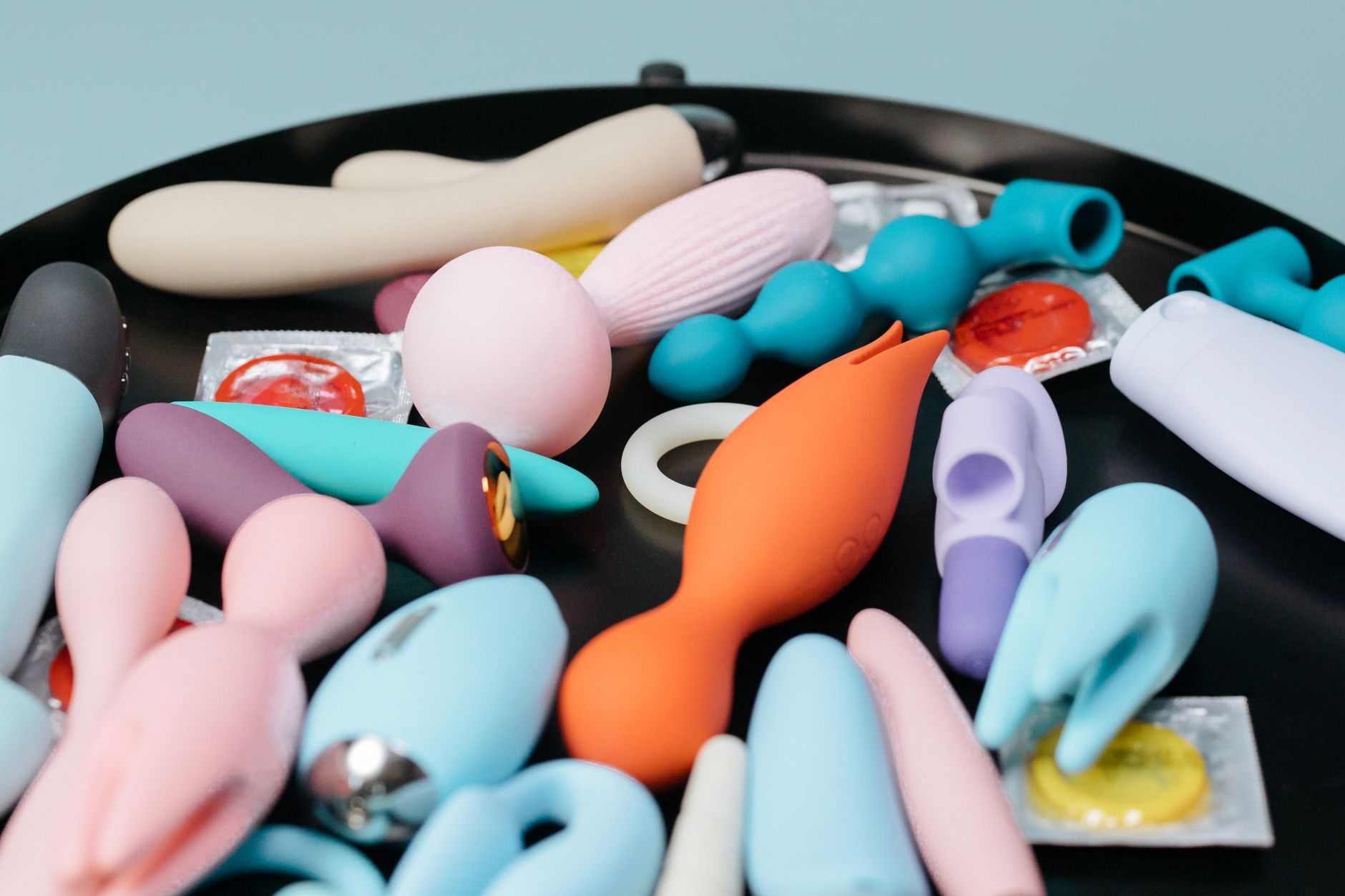
Let's talk about intensity without the shame
You bought a vibrator. You turned it on. And immediately thought, "Okay, that's way too much." This is not a sign you're broken or too sensitive. It's actually really common, and it's fixable.
Here's the thing about vibrators: most of them are designed with a very specific assumption about what feels good, and that assumption doesn't fit everyone. Some clitoral vibrators buzz at frequencies or amplitudes that feel less like pleasure and more like static electricity. Others have a pattern you didn't want. And sometimes your body is just more sensitive that day.
Why intensity can feel like too much
There are several actual reasons sensation can feel overwhelming, and none of them mean you should stop exploring.
Sensitivity varies by cycle and stress level. During the luteal phase (after ovulation), your clitoris is literally more sensitive to touch. If you're stressed or tired, your nervous system is already activated, which means external stimulation feels amplified. You're not imagining it. Your body is legit processing more.
Most vibrators default to maximum. The entry-level vibrators designed for mass appeal tend to assume more is more. They arrive with the strongest pattern as the default, which means you're getting blasted on setting one. You shouldn't have to hunt through seven buzzing patterns to find something tolerable.
Your clitoris has the density of nerve endings that the tip of your penis has. That's why it's so capable of pleasure. It's also why it can feel raw or oversaturated. Your clitoris isn't defective for saying no thanks. It's doing its job.
Toy design matters. A traditional bullet vibrator holds the vibration right on the nerve cluster. That's intentional, but it also means there's nowhere to go if the sensation is too direct. A clitoral suction toy like a lemon vibrator distributes stimulation differently. The mechanism creates a gentle pull rather than direct buzz, which many people experience as more approachable.
How lemon vibrators change the intensity equation
Lemon vibrators use a completely different stimulation method than traditional vibrators. Instead of direct vibration against the clitoris, they use gentle suction and pulsing patterns that simulate oral sex. This matters because it changes not just the intensity, but the character of the sensation entirely.
Here's what you get: the stimulation is diffused across a larger area, which means no single point is being bombarded. The sensation is rhythmic rather than constant, which gives your nervous system a moment to breathe between pulses. And honestly, for many people, suction-based stimulation just feels less aggressive on the clitoris without being less effective.
This doesn't mean lemon vibrators are weak. They're not. They're just a different approach to the same goal. You can absolutely have intense, fast, overwhelming-in-a-good-way orgasms with a lemon clitoral vibrator. The difference is you get to build to that intensity gradually, which is actually how most people's pleasure works best anyway.
Starting with patterns that work
When you first use a lemon vibrator, start on the lowest setting. This sounds obvious, but I'm saying it because many of us have been conditioned to think more = better. It's not. More = what your body can actually handle.
Without Lemon Pleasure Toys' app or controls, start with one of the gentler pulse patterns. These usually feel like a steady rhythm rather than a continuous buzz. Let it sit for 10-15 seconds. Notice what your body does. Does it want more, or is this already plenty? There's no right answer. Your answer is the right answer.
Build up gradually if you want to. You're not racing to an orgasm. You're learning what turns your nervous system on without overwhelming it.
The role of lubrication and placement
Here's something people don't talk about enough: where you place the toy matters more than how strong it is.
Direct contact on the clitoral glans (the visible tip) is going to feel more intense than contact on the hood or the surrounding vulvar tissue. If intensity is the problem, try placing the lemon vibrator slightly off to the side, or over the clitoral hood rather than directly on the tip. You'll still feel the stimulation, but it won't feel like you're holding a jackhammer against your most sensitive nerve ending.
Water-based lubricant also changes everything. It softens the sensation, creates a buffer between your body and the toy, and honestly just makes the whole experience feel less abrasive. Use it generously.
When sensation needs to be dialed back mid-session
You're in the middle of something, arousal is building, and suddenly it tips from good-intense to too-intense. This happens. Here's what you do.
First, pause. Lift the vibrator away from your body. This isn't failure. This is your body communicating, which is exactly what you want. Take three breaths. Sometimes your body just needs a second to recalibrate.
Then either switch to a lower setting if your vibrator has one, or if you're using a lemon vibrator, try a different pattern. The gentler pulse patterns are often more sustainable for longer sessions. Or you might need to stop entirely for a few minutes. That's fine too.
The reason I'm emphasizing this is because lots of people think they should be able to power through intensity they don't enjoy. You don't. You're allowed to adjust. In fact, adjusting midway is how you learn what actually works for your body.
Building tolerance without pushing
Here's something counterintuitive: the more relaxed you are, the better intense sensation feels. Tension and anxiety make everything feel sharper and less pleasant. So if you're white-knuckling through vibration because you think you should, you're actually making the intensity worse.
Take time to actually warm up before using any vibrator. Get aroused first. Give your nervous system permission to be open rather than defensive. How to Use Lemon Vibrators When Arousal Feels Slow or Delayed With a Partner goes deeper into arousal buildup strategies.
If you want to gradually work toward using higher settings as your body acclimates, great. But know that you don't have to. Plenty of people use lower settings or pulse patterns their whole lives and have phenomenal orgasms. Your pleasure doesn't need to be loud or overwhelming to be real.
The partner conversation
If you're using a lemon vibrator with a partner, the intensity thing becomes a shared conversation. Some partners worry that if the vibration is "too much" for you, they've done something wrong or aren't enough. They haven't. This is about your body's preferences, not about your feelings for them.
The simplest approach: be direct. "I like this setting better." "Let me try it this way." "That feels better at a slightly lower intensity." Partners generally appreciate honesty more than they appreciate you white-knuckling through something uncomfortable for their sake.
If your partner is someone who wants deep stimulation while you want something gentler, a lemon vibrator is actually a great tool because it offers a different sensory experience entirely. You're not competing over the same toy. You're using it together in a way that works for both of you.
When to worry and when to relax
Some temporary sensitivity is completely normal. Hormonal shifts, stress, medication changes, or just being tired can all make sensation feel more intense.
But if intense sensation is consistently painful, or if you experience persistent nerve pain afterward, check in with a doctor. This is rare, but it happens, and it's worth ruling out things like vulvodynia or nerve sensitivity issues that benefit from actual treatment.
For most people, though, overwhelming sensation just means you haven't found the right approach yet. And that's actually exciting because it means there's a whole landscape of intensity levels and patterns ahead of you. Lemon vibrators, with their suction-based approach, often land in that sweet spot for people who find traditional vibrators too intense. It's worth trying.
FAQ
What's the difference between a lemon vibrator and a regular vibrator for people with sensitivity?
A lemon clitoral vibrator uses suction and pulsing rather than direct vibration, which distributes sensation across a wider area of tissue. This feels gentler and more rhythmic than a traditional bullet vibrator's constant buzz. Most people find it less overwhelming while still being highly effective.
Can I use a lower setting on a regular vibrator instead of buying a new toy?
Yes, if your vibrator has multiple settings. But many entry-level vibrators don't have true intensity control, only pattern changes. And even on the lowest setting, some vibrators buzz at frequencies that feel unpleasant regardless of amplitude. A lemon vibrator's mechanism is fundamentally different, which is why people often find it less intense even on comparable settings.
Does numb sensation mean I need a stronger vibrator?
Not necessarily. Numbness during solo play can actually mean you need a break, better lubrication, or a different type of stimulation entirely. Pushing harder when your body feels numb usually doesn't wake things up. Sometimes it means your nervous system is fatigued. How Lemon Vibrators Help When Sensation Feels Numb or Distant During Solo Pleasure walks through this in detail.
Is there such a thing as too sensitive down there?
Your clitoris has about 8,000 nerve endings in a space smaller than a pea. You're not too sensitive. You're anatomically precise. That's not a flaw. That's why vibrators need to be thoughtfully chosen. Your sensitivity is a feature, not a bug.
How do I know if I'm being too picky about intensity?
If you've tried the same toy at least three times in different contexts (different times of day, stress levels, arousal states) and it consistently feels overwhelming, it's not the right toy for your body right now. That's not picky. That's informed.
Can I use a lemon vibrator if I've had vulvodynia or other clitoral pain?
Maybe. If you have a history of pain, check with your gynecologist before introducing vibration, even gentle suction-based vibration. Some people with vulvodynia find lemon vibrators more tolerable than traditional vibrators, but this really varies. Your doctor can give you personalized guidance based on your specific situation.
Your pleasure is worth fine-tuning
Intensity isn't a measure of how good something is. It's just intensity. Your job is to find what actually works for your body, and your body is allowed to say no to something that feels overwhelming. That's not limiting your pleasure. That's protecting it.
If traditional vibrators have felt too strong, a lemon vibrator might be the recalibration you've been looking for. And if you're still exploring, How to Start Using Lemon Vibrators If You've Never Owned a Toy Before is a solid primer on finding your baseline.
Your body knows what it likes. The trick is listening instead of pushing. Everything else follows from there.