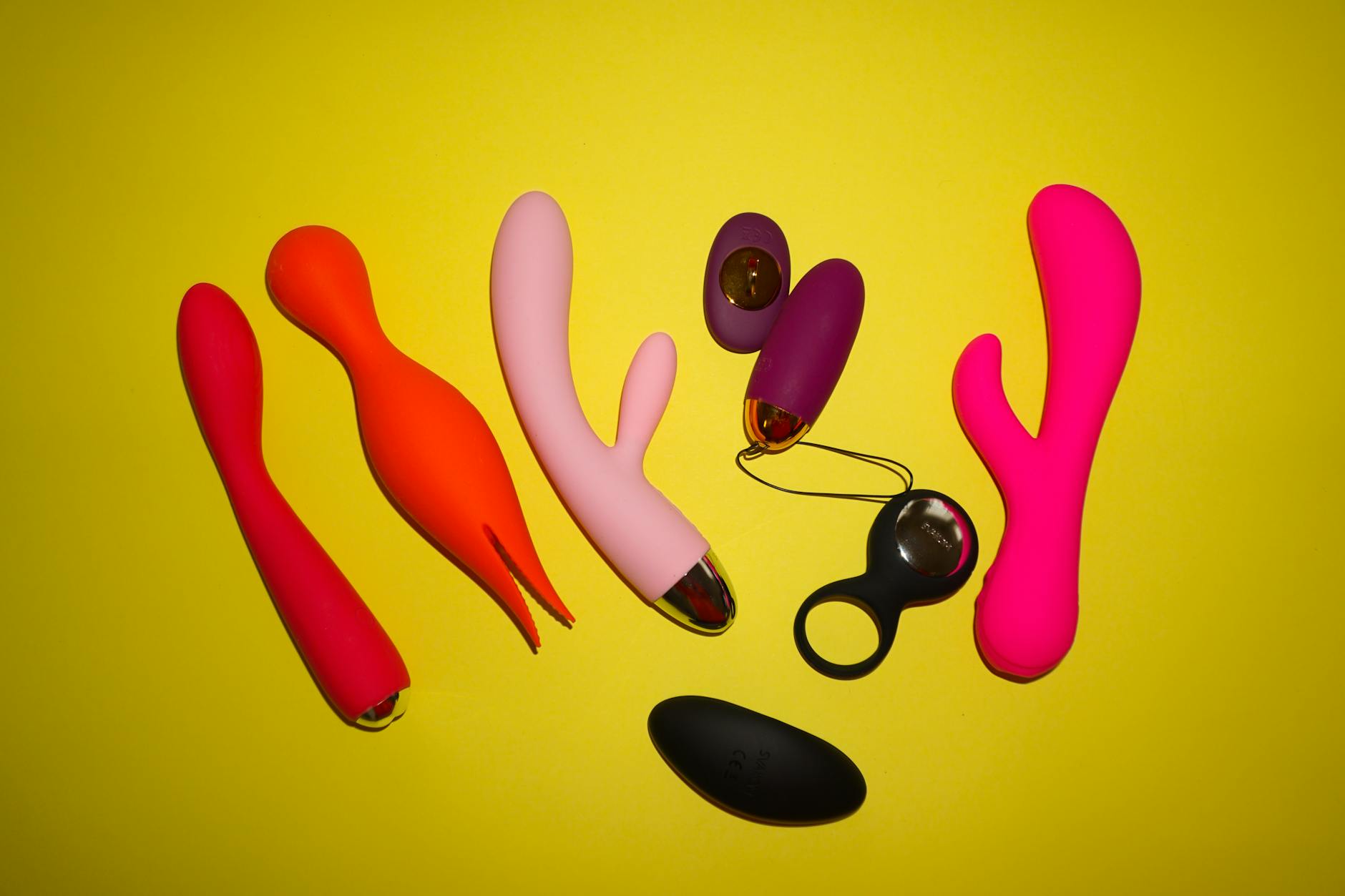
How to Use Lemon Vibrators When You Have a New Relationship and Want to Go Slow
New relationships thrive on pacing. Here's how to introduce lemon clitoral vibrators thoughtfully, build trust through pleasure, and let intensity develop at your actual speed, not the speed you think you should be at.
There's a weird pressure built into early dating: move fast, prove you're sexually compatible, show up as your "full self" immediately. But here's what I've watched happen in hundreds of therapy sessions. When people rush intensity in a new relationship, they often skip the part where actual arousal builds. They're performing a version of sex they think they should want instead of discovering what they actually want with this specific person.
A lemon vibrator changes that equation. Not because it's magic, but because suction-based stimulation lets you build sensation gradually, notice what feels good in real time, and communicate about it without the self-consciousness of a traditional vibrator.
Traditional vibrators have a learning curve. You're figuring out angles, pressure, speed, where exactly to position it. That's a lot of logistics when you're also managing new-person nervousness.
Lemon clitoral vibrators work differently. The suction creates stimulation across a wider area, which means there's less guessing involved. You're not hunting for the perfect spot. The sensation spreads, which feels gentler to start and lets you notice your body's response without overthinking the mechanics.
This matters in new relationships because sex becomes less about performance and more about information gathering. You're learning what your nervous system likes. Your partner is learning how you respond. That's connection.
This is the part people skip, and it's the part that matters most.
If you're considering introducing a lemon vibrator into a new relationship, talk about it first. Not during sex, not as a surprise. I mean a real conversation: "I've been thinking about trying something new. I have a lemon vibrator. Would you be interested in exploring that together?"
Listen to what comes back. Some partners will be enthusiastic. Some will need reassurance that this isn't about them or their abilities. Some will need time to think about it. All of those responses are information. This conversation is actually a trust-building moment, not an obstacle.
If your partner seems hesitant, don't skip to defending the device. Ask why. Often the hesitation has nothing to do with lemon vibrators and everything to do with feeling replaced or inadequate. That's a separate conversation worth having now, in a new relationship, when you still have time to build real intimacy.
You bought a lemon vibrator. Your partner is on board. Now what?
Start low. The temptation is to jump to intensity level four or five because that's where the magic happens. But you're not there yet. You're in the information-gathering phase.
Begin with pattern one. It feels like gentle waves, not aggressive vibration. Let your body get used to the sensation. This takes 5 to 10 minutes. Your nervous system needs time to register pleasure. New relationship bodies are often slightly on guard, even when you trust the person. Low intensity lets your nervous system relax.
Pay attention to what's happening. Are you aroused? Is it building? Is there tension somewhere you didn't expect? Notice that. You'll tell your partner about it later.
Honestly though, the first time doesn't have to result in anything. Your goal is: Does this feel good? If yes, great. If it feels weird, that's also fine. You have time.
Here's what I see go wrong: one person starts using the lemon vibrator during solo sessions before they've used it with their partner. Then when they finally use it together, they're not learning about the device with their partner. They already know what turns them on. The partner is watching someone enjoy something they didn't help create.
It feels different to discover pleasure together. Less like a performance. More like exploration.
If you're introducing a lemon vibrator into a new relationship, use it together first. Let your partner see your face when the sensation hits. Let them ask questions. Let them learn your body alongside the device. This builds trust in a way that nothing else does.
If you've been using it solo, it's not too late. The next time you use it with your partner, narrate what's happening. "When I use pattern two, it feels like...," or "I like it better when you're touching me at the same time." You're building narrative together, not defending a solo habit.
One of the biggest gifts of a new relationship is that you don't have baggage yet. You don't have years of resentment about who initiates sex or how often or what counts as "real" sex. You get to build those agreements from scratch.
Use that. Tell your partner what you need. "I want to go slow," is information. "I want us to try this together," is information. "I'm nervous and I need you to check in with me," is information.
When you're using a lemon vibrator with a new partner, build in check-in points. After 10 minutes: "How are you feeling?" Not just about the device. About the pace, the vulnerability, whether you want to keep going or shift into something else. Partners who check in are partners who care. Let yourself notice that.
You might use a lemon vibrator and not orgasm the first time. Or the third time. That's not a failure. That's normal, especially in a new relationship when your nervous system is managing arousal plus anxiety plus the desire to not disappoint someone you like.
Many people rush to higher intensity settings because they think intensity equals pleasure. But pleasure isn't a linear climb. Sometimes the best sensation comes at pattern two, held there for 15 minutes, while your partner touches you somewhere else. Sometimes orgasm isn't the point. Sometimes the point is just: this feels good, and I'm here with someone I trust.
New relationships give you permission to slow down. You don't have years of "usually we do it this way" to work around. You're building the usual right now. Make it one that doesn't require intensity to mean something worked.
Week one: conversation and maybe one gentle exploration together. Pattern one. No pressure toward orgasm.
Week two: if week one felt good, try it again. Maybe introduce pattern two if pattern one is feeling tame. Still keeping it under 15 minutes.
Week three: you've got data now. You know what feels right. Maybe you add touch from your partner at the same time. Maybe you use it during partnered sex instead of solo. Maybe you stick with the same pattern because it's working.
Week four: you're probably comfortable enough to be more adventurous. Try different patterns. Notice what changes when you're relaxed versus when you're anxious. Lemon clitoral vibrators are responsive to your nervous system state. That's useful information.
This isn't a linear progression. Some weeks you'll want to skip the device entirely. That's fine. You're not on a timeline.
This is huge. This is the moment pleasure becomes collaborative instead of solo.
When you've been using a lemon vibrator on yourself and your partner asks to try, that's trust-building in action. Let them. Tell them what you've learned: "Pattern two feels best on me," or "I like it better when you move it slowly." You're giving them the map, not making them guess.
Many people find that a partner using the device feels completely different from using it solo. The sensation is the same, but the context isn't. There's connection. There's the knowledge that someone else is choosing to focus on your pleasure. That matters neurologically.
If it feels vulnerable, that's okay. New relationships are supposed to feel a little vulnerable. That's how you know you're actually present.
Not if you frame it as exploration, not if you get buy-in first, and not if you're using a device like a lemon vibrator that feels less intimidating than a traditional vibrator. Early relationships are actually the best time to build pleasure practices together because you're not rewriting years of habit. You're building habit from scratch. A lemon clitoral vibrator is a tool for that, not a red flag.
That's the fear underneath most hesitation, and it's worth naming directly. Say it out loud: "I'm not introducing this because you're not enough. I'm introducing it because I want to explore pleasure with you, and this feels like a fun way to do that together." Reassurance isn't one sentence. It's consistent action. It's you choosing them, inviting them, building this together. The lemon vibrator isn't a replacement. It's an invitation.
You ask. Multiple times, at different moments. "Are you actually into this or are you going along with it?" You watch their body language. You notice if they're engaged or checked out. You create an exit ramp. "If this isn't working for you, we can stop and do something else." Trust isn't assumed. It's built through repeated communication.
Both can be true. Some people find that a lemon vibrator during partnered sex lets them be more present because they're not anxious about orgasm. Others find it distracting. The only way to know is to try it, and then ask your partner what it felt like for them. Communication turns it from an awkward situation into data.
That's not actually about the vibrator. That's usually about pacing, pressure, or misalignment in what you both want. Take it as information. Use it as a conversation starter. "I notice the lemon vibrator feels easier for me. Can we talk about what that means?" Sometimes the answer is that you need more foreplay. Sometimes it's that you need different communication during sex. Sometimes it's that you're not actually compatible in this way, and that's useful to know early.
Wash it with warm water and mild soap before the first use. If you've used it solo, wash it again before partnered play. Dry it completely. That's it. No mystery. Taking care of your device shows you take pleasure seriously, and your partner will notice that.
New relationships are when you get to decide what sex looks like for you both. Not what it should look like. What it actually does look like when you're together.
A lemon vibrator isn't the point. Honesty is. Pacing is. Curiosity about your partner's body and your own is. If you can build those things while exploring a new device, you're building something that will actually last.
Start slow. Talk first. Notice what feels good. Tell your partner about it. Do it again. That's the whole playbook.
Your pleasure matters. Your partner's comfort matters. The pace matters. You don't have to rush any of it.
If you're ready to explore this with a new partner, Hello Nancy's lemon clitoral vibrators are designed to support exactly this kind of gradual discovery. But the device is just the tool. You're the actual engine of what happens next.
Ready to build something together? Reach out if you want to talk through what a pleasure practice looks like in your specific relationship.