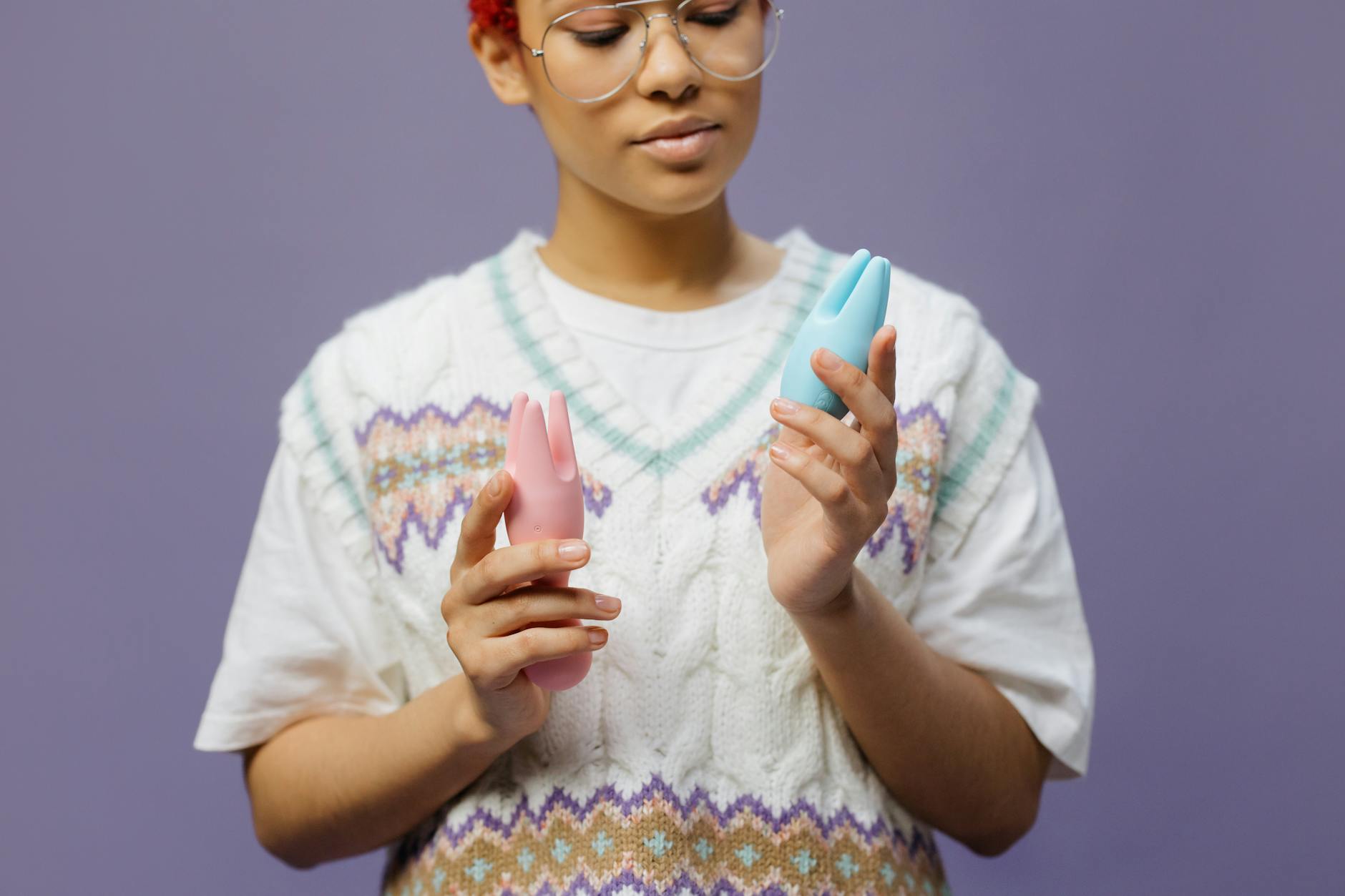
Here's the thing: most partnered sex problems aren't about desire or attraction. They're about timing. One person reaches full arousal in five minutes. The other needs twenty. By minute seven, the faster partner is ready to move on. The slower partner is still warming up. So they either rush (and skip what they actually need), or the arousal disappears entirely while they wait.
Lemon vibrators solve this by removing the pressure to keep pace with each other. Instead of watching the clock or faking readiness, you both get to finish warming up at your own speed, together. It sounds simple because it is. But it requires a conversation first.
Introducing a toy into partnered sex without talking first is the fastest way to create distance. The receiving partner thinks: "Am I not enough?" The giving partner thinks: "Is this unwelcome?" The toy sits between you, literally, while nobody says anything.
Start here instead. Tell your partner: "I want us to have time to actually be fully into it. I want you to get what you need, and I want to get what I need. That might mean different warm-up speeds. And I think using something together could help us both relax and actually enjoy ourselves."
Notice what's not in that sentence: "You're taking too long." "I'm bored." "You're not turning me on fast enough." Those land like criticism. The framing above is collaborative. It's about both of you getting better pleasure, not about fixing a problem.
Lemon clitoral vibrators like the Lem work through suction and pulsation, which means they stimulate the clitoris and surrounding tissue in a way that builds arousal faster than manual stimulation alone. Your partner can kiss your neck, touch your body, talk to you, or be inside you while you use it. You're not replacing them. You're adding a tool that helps your nervous system get to the ready place faster.
This matters because arousal isn't just about time. It's about neural activation. A vibrator that targets the right spot with the right pressure can accelerate that activation by 30-50 percent in many people. That's not a huge jump, but it's the difference between fifteen minutes and ten. It's the difference between sex that feels rushed and sex that feels unhurried.
During foreplay: you control it. Your partner is touching you, inside you, or next to you. You hold the lemon vibrator and use it at whatever intensity and rhythm feels good. Your partner stays engaged with their hands and mouth. You're not hiding behind the toy. You're using it openly, and they can see what you need. This usually takes arousal from "not yet" to "yes, now" in about ten minutes.
During penetration: they can reach it. If you're on top, your partner can hold the vibrator against your clitoris while you control the pace of penetration. If you're on your back or side, they can use it while moving inside you. The toy doesn't replace the penetration. It complements it. You get both sensations at once, which accelerates arousal significantly.
After penetration starts: you use it solo. Some partners like to get inside you first, then let you bring the vibrator into the mix. This works especially well if penetration alone doesn't give you the clitoral stimulation you need to stay aroused or reach orgasm. You're not hiding it. You're just adding it as the session progresses.
Each position has a different rhythm and different communication needs. Pick one that feels natural to both of you.
When you introduce the vibrator, name the arousal speed thing directly. "I want us to both be really into this. My body sometimes needs a little more time to catch up. This helps us get on the same page." Your partner hears: "I want us both to feel amazing." That's what they should hear. That's what you mean.
Then watch what happens. Most partners feel relief. They've probably felt the timing mismatch too. Or they've felt you faking readiness. Using the tool together gives permission to both slow down and actually enjoy the experience.
Don't assume they'll be thrilled immediately. Some partners need a minute to process the shift. That's normal. What matters is that you stay calm and curious, not defensive. "What would make this feel good to you?" is a much stronger opener than "Don't you want us to both have better sex?"
Charge the vibrator before you start. Wet your hands or apply water-based lubricant. Start on the lower vibration settings, even if you usually prefer higher intensity. Arousal changes how sensitive you are, especially with a partner in the room, and the last thing you want is overstimulation that kills the mood.
If you're using it during penetration, lube matters even more. The vibrator should glide, not drag. Reapply every few minutes if needed.
Talk during it. "That feels good." "A little higher." "Slower." Your partner isn't a mind reader. Neither are you. The vibrator gives you both permission to actually guide each other instead of just hoping it works.
Most couples find that once they get comfortable with the vibrator, the speed mismatch stops feeling like a problem. Why? Because you're no longer in a race. You're both actively engaged in bringing each other to arousal. The penetration isn't the only thing happening. The touch isn't the only thing happening. The vibrator isn't the only thing happening. It's all together, which means it all matters equally.
That shifts the entire experience from "waiting for the slower person" to "building something together." And honestly, sex that feels collaborative is almost always better sex.
One more thing: don't let a partner convince you that wanting to use a toy means something is wrong with them or with your attraction. It doesn't. How to Use Lemon Vibrators When a New Partner Asks About Toys goes deeper into that conversation if you need language. But the short version is simple. Better arousal, faster arousal, and shared pleasure aren't criticisms of your partner. They're gifts to both of you.
Not if you frame it right. The vibrator adds to the experience, it doesn't replace your partner's role. They're still touching you, inside you, talking to you, and engaged the entire time. The vibrator is just one tool. In fact, most partners report feeling more connected because you're both actively working together to make sex better. If your partner is still concerned, reassure them directly: "I want you more involved, not less. This helps us actually enjoy each other."
Begin on the lowest setting you own, even if you normally prefer stronger vibration. Arousal changes sensitivity, especially with a partner present, and you don't want to overwhelm your body before you're fully warmed up. You can always increase intensity mid-session. Most people find that as arousal deepens, they actually want more stimulation, so you'll probably naturally work your way up.
Start with just holding it together. Let them feel the vibration in their hand while it's in yours. Then guide their hand to where it feels good. You're in control. They're just learning your body's language. This takes the pressure off both of you and lets it feel like exploration rather than performance.
Absolutely. In fact, partnered use is often easier for beginners because you have built-in communication and support. Just start slowly, use plenty of lubricant, and remember that there's no "right" way to do this. What feels good to your bodies is the only rule that matters.
There's no standard. Some people reach full arousal in five minutes. Others need twenty or thirty. The goal isn't speed. It's that you're both ready at roughly the same time so neither person is rushing or waiting. Lemon vibrators help close that gap when there's a significant mismatch, not because they're magic, but because they provide direct clitoral stimulation that accelerates arousal for many people.
Then the issue might not be speed. It might be how foreplay feels disconnected from arousal, or it might be something deeper like mismatched libidos. A vibrator is a tool for faster clitoral arousal specifically. It's not a cure-all for every partnered sex challenge. But it's a solid first move if the timing gap is the main frustration.
When two people decide to use a lemon vibrator together, something usually changes beyond just the physical mechanics. There's less performance anxiety. There's more permission to ask for what you need. There's a conversation happening that most couples never have. And that conversation is what transforms sex from a thing you do to a thing you build together.
The vibrator is just the vehicle. The real shift is the permission to slow down, to be intentional, and to let your partner actually know what helps you feel aroused. That's the part that sticks around, long after the toy is cleaned and put away.
If you're ready to try this with your partner, start with the conversation. Then move to the toy. The order matters.