Let's talk about the guilt nobody mentions
Honestly? Pleasure guilt is one of the most common obstacles I see in my practice, and almost nobody talks about it openly. You might want to use a vibrator. You might even have one sitting in a drawer. But the moment you think about using it, a voice shows up that says something like: "This is selfish," or "I shouldn't need this," or "What if someone finds out?" That voice isn't you being prudish. It's the accumulated weight of messages you've absorbed since childhood about what's acceptable for your body.
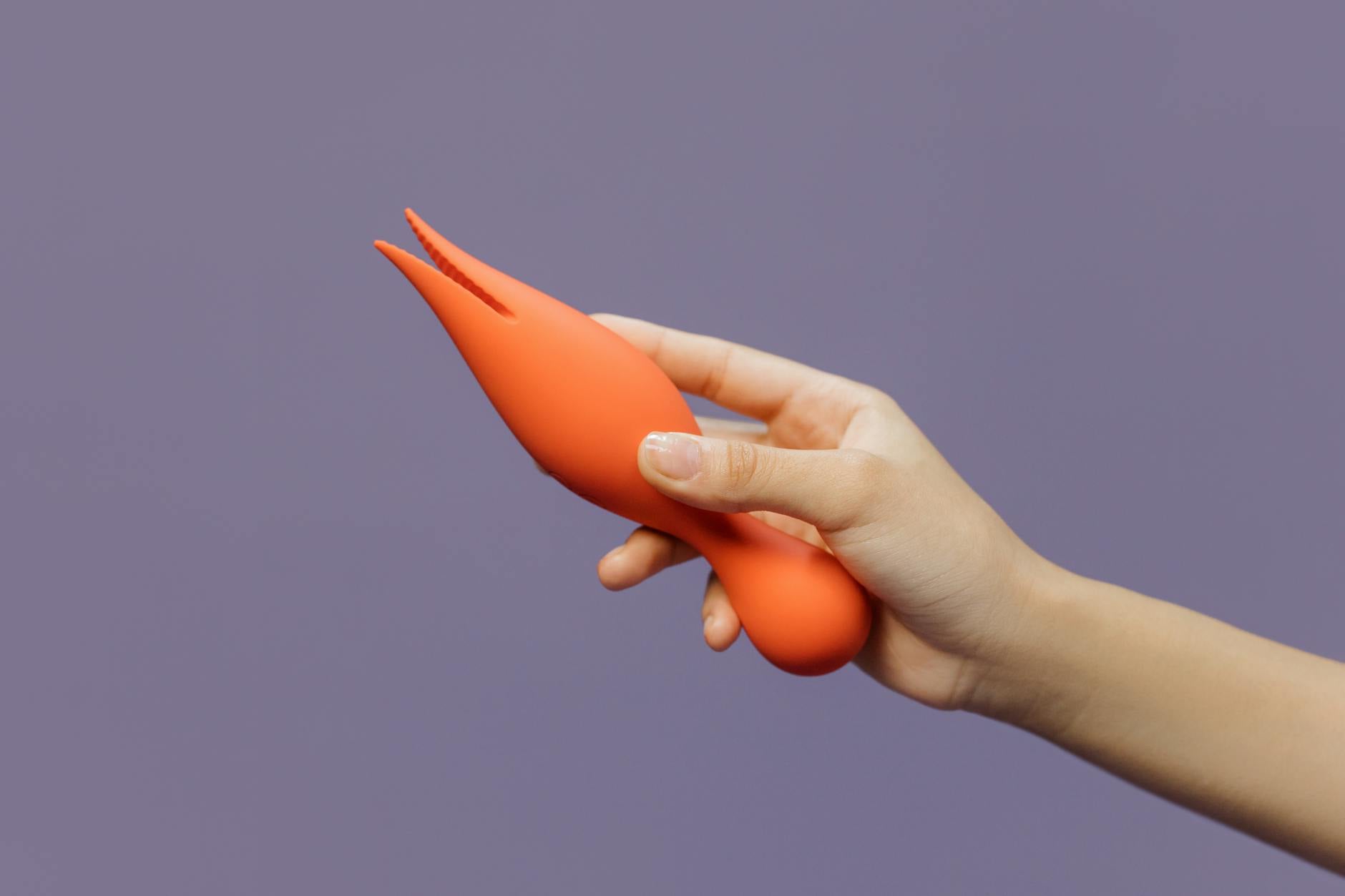
The thing is, that guilt is workable. And lemon clitoral vibrators, specifically because they're designed for direct stimulation and fast results, can actually become a tool for dismantling shame instead of reinforcing it.
Here's what we're going to do: unpack where the guilt actually comes from, then show you how to use a vibrator in a way that actively contradicts the shame.
Where pleasure guilt actually lives
Guilt about masturbation or solo pleasure typically comes from one of three buckets, and often all three at once.
Religious or family messaging. You grew up hearing that sex is for making babies, or for a committed relationship, or that touching yourself is wrong. That messaging lives in your nervous system, not just your thoughts. Your body might literally have learned to tense up when you try to pleasure yourself.
The "I should be satisfied by a partner" narrative. This one's particularly insidious because it's dressed up as romance. If you're in a relationship, using a vibrator alone can feel like a rejection of your partner, or proof that they're not enough. If you're single, using a vibrator can feel like settling. Both are lies, but they're pervasive ones.
Visibility and shame. Even if you're intellectually fine with pleasure, owning a vibrator means someone might find it. That potential exposure can trigger deep shame, especially if you weren't given permission to be sexual in your family or culture.
All of this is learned. That means it's unlearnable.
Why vibrators specifically help with guilt
Using a lemon sexual toy during solo play creates what I think of as a "shame interrupt." Here's why.
When you use your hand alone, it's easy for the shame voice to creep in and convince you that you're being selfish or weird. But the moment you pick up a vibrator, you've made a deliberate choice. You've said out loud (even if just to yourself): "I deserve pleasure. This matters enough for me to prepare for it."
A lemon vibrator does something even more specific. Because of how air-suction technology works, it delivers consistent, reliable stimulation. You're not relying on your own effort or technique. The toy does the work. This shifts something in your brain from "I am pursuing pleasure," which can feel selfish and active, to "I am receiving pleasure," which feels more permissible. Psychologically, receiving feels like a gift. Pursuing feels like greed.
That's not actually true, but your nervous system might believe it anyway. The vibrator helps short-circuit that.
The pre-session reality check
Before you even turn a vibrator on, I want you to do a quick internal audit. Ask yourself: "What specifically am I afraid will happen if I do this?"
Will someone find out? That's a privacy question. Solve it practically. Lock the door. Use a app timer so you know when the person you live with is coming home. Store it somewhere genuinely private.
Am I betraying a partner? That's worth a separate conversation with them, but solo pleasure isn't betrayal. If you're in a relationship and feel like it is, that's relationship work worth doing, not proof that masturbation is wrong.
Am I being selfish? No. You're being responsible for your own pleasure, which is a form of self-respect. Your partner can't give you every orgasm you're entitled to. That was never the deal.
Wrote down your specific fear? Good. Now identify what would actually disprove it. If you're worried about shame, commit to the fact that your pleasure is legitimate. Write it down if you need to. "I deserve to feel good. My body is mine. This is okay."
I'm not suggesting affirmations alone will delete 30 years of conditioning. But the ritual of naming the fear and contradicting it out loud shifts something.
Using a lemon clitoral vibrator when shame shows up mid-session
You've started. The vibrator is on. And suddenly the guilt voice shows up anyway. This is normal. Shame doesn't always wait for logic.
Here's what to do: notice the voice without engaging it. Don't argue with it. Don't try to think it away. Just observe it, like you're watching a thought move across a sky. "There's the guilt. It makes sense given my history. And I'm still here. I'm still doing this."
Then, return your attention to sensation. This is where the lemon vibrator's design helps. Because the stimulation is so targeted and clear, your attention has somewhere concrete to land. You're not thinking about shame. You're feeling vibration, pressure, rhythm.
If the shame voice gets louder instead of quieter, take a pause. You're not failing. You're learning to tolerate discomfort while doing something new. That's actually the skill. Stay with the vibrator for two more minutes. Not because pleasure is the goal (though it might be), but because completing the act despite the shame teaches your nervous system that you're safe.
Making it a ritual, not a guilty secret
The difference between masturbation that reinforces shame and masturbation that heals it is framing. If you're sneaking it, hiding afterward, or treating it like something you're doing wrong, your nervous system absorbs that message.
Instead, try this: give yourself explicit permission. Choose a time when you have privacy and won't be interrupted. Set a boundary with anyone in the house: "I need 20 minutes alone." You don't have to say why. But naming that you've chosen this time changes the energy from "sneaking" to "claiming."
Cleaning your lemon vibrator afterward, storing it somewhere you don't feel ashamed to keep it, maybe even lighting a candle beforehand. These aren't frivolous rituals. They're you telling yourself: "This is a thing I do. It's normal. I'm not hiding."
When people start treating solo pleasure like an intentional practice instead of a guilty secret, the guilt often melts without much additional work.
What to do if guilt keeps showing up
Sometimes the shame runs too deep for solo troubleshooting. If you're using a lemon vibrator, giving yourself permission, and the guilt is still overwhelming, that's often a sign of deeper relational or religious trauma that's worth processing with a therapist.
This isn't a weakness. This is you respecting that some messages are embedded too far for you to untangle alone.
But most people find that the combination of a deliberate choice, a tool that works reliably, and a shift from secrecy to ritual actually rewires something. Your pleasure matters. Your body is yours. And a vibrator is just a tool that makes that easier to feel.
FAQs about pleasure, guilt, and lemon vibrators
Is masturbation selfish if I'm in a relationship?
No. Solo pleasure and partnered sex serve different functions. One isn't a substitute for the other. Using a vibrator alone doesn't mean your partner isn't enough. It means you're responsible for your own pleasure, which is actually a form of respect in a relationship. You know what you want, and you can communicate that.
How do I stop feeling ashamed after I use a vibrator?
The shame usually comes from treating it like something you did wrong. Change the framing. You didn't indulge. You practiced self-care. You honored your body's needs. If you can, tell one trusted person that you have a vibrator and normalize it out loud. Shame thrives in silence.
What if I feel guilty even though I want to use a lemon clitoral vibrator?
That tension between wanting and feeling guilty is where most people live. The goal isn't to eliminate the guilt before you start. It's to take the action anyway, which gradually teaches your nervous system that you're safe. Use the vibrator. Notice the guilt. Keep going. Repeat.
Can I use a vibrator if I grew up with strict religious teachings about sex?
Yes, and it might take more intentional rewiring than it does for someone without that background. Consider working with a therapist who specializes in religious trauma or sexual shame. In the meantime, you can still use a vibrator as a deliberate act of self-reclamation. That's actually powerful.
Does using a vibrator mean I can't have good partnered sex?
Absolutely not. In fact, knowing your own pleasure makes you a better partner. You know what actually gets you there. You can communicate clearly. You're less dependent on your partner to figure you out. All of that improves sex.
How do I get over guilt if I'm living with family or a partner who might judge me?
Privacy first. Lock your door. Use a white noise machine if that helps. If you truly can't create that privacy, consider your logistics carefully. Sometimes guilt isn't just psychological. Sometimes it's practical. Once you have privacy, work on the internal permission. That's where the actual freedom happens.
Your pleasure is not a burden. It's not selfish. It's not something you need to apologize for. A lemon vibrator is just a tool that helps you practice believing that. Keep practicing, and eventually, you will.