
Here's the friction nobody talks about
One person wants to bring toys into the bedroom. The other person thinks toys mean their partner isn't satisfied with them. One conversation later, the toy sits in a drawer and resentment takes its place. This isn't about pleasure anymore. It's about perceived rejection.
Let me be clear: this is fixable. But it requires separating three conversations that usually get tangled up and suffocate each other.
Why partners resist toys (and it's rarely what you think)
Most people assume resistance is about insecurity. Sometimes it is. But more often, it's about misunderstanding what a toy actually means.
Here's what people actually worry about:
"If I can't make you come, am I failing?" This one is huge. Many partners internalize orgasm as evidence of their competence in bed. Introduce a vibrator and suddenly they feel like they're being replaced. The real problem: you both learned that one person's pleasure is another person's responsibility. That's not how bodies work.
"Toys feel clinical or cold." If someone learned that "real" sex is what happens without devices, toys can feel like cheating. They're thinking about intimacy as a specific script, not as a spectrum.
"This means something is wrong with us." Partners often interpret toy interest as a sign the relationship has stopped working. They think, "If things were good, we wouldn't need this."
"I don't know what my role is anymore." Introducing a tool feels like introducing a third person. It's disorienting.
None of these reasons are actually about the toy. They're all about meaning and identity. Start there, not with the vibrator.
The conversation before the conversation
Don't lead with the toy. Lead with desire.
Find a moment outside the bedroom when you're both relaxed and not trying to have sex. Then say something honest: "I've been thinking about us, and I realized I haven't asked you what you actually want from our sex life lately. Not what you think I want to hear. What you actually want." Listen. Actually listen, without defending or problem-solving.
Then: "I've been curious about exploring together a bit. Not because anything is wrong. Because I want to know more about what feels good for both of us." Notice the difference? You're not saying "I need a vibrator." You're saying "I want to explore together."
If they say no, don't push. Ask why. Listen to the actual worry underneath. It's almost never the toy itself.
Three approaches for three different types of resistance
When they think toys mean you're unsatisfied
You need to rewire what a toy represents. Start by talking about your own body, not theirs.
Say: "My body has been harder to figure out lately. I'm curious what helps me come more reliably, and I think experimenting together could be fun. This isn't about you being bad at sex. This is about me understanding me better." This shifts the frame from "you're not enough" to "I'm learning about myself."
Then invite them into that learning. "Would you be interested in watching? Or helping me figure out what feels good?" Notice you're not removing them from pleasure. You're including them in discovery.
When they see that a clitoral vibrator like The Lemon Pleasure Toys' lemon vibrator actually helps you feel more present and responsive, the meaning changes. It's not a replacement. It's a tool that makes you better at enjoying what you already have together.
When they think toys are "unnatural" or "cheating"
This resistance is about storytelling. They learned a specific story about what sex "should" be.
You can't argue someone out of a story with facts. But you can offer a different story. "I used to think that too. Then I realized I have a vibrator in my toothbrush and an espresso machine in my kitchen. Tools don't make things less real. They make them better. Same with this."
Then offer evidence. Use the toy together in a low-pressure moment. Ask them to touch you while you use it. They'll feel the difference. Their hand plus the toy's sensation creates something new. It's not replacing them. It's amplifying.
When resistance is about "naturalness," sometimes the switch flips when they realize pleasure itself is the point, not purity.
When they're afraid of losing their role
This is the deepest one. Your partner sees sex as a performance where they lead and you respond. A toy threatens that script.
Reframe sex as something you do together, not something one person does to another. "I want us to explore what feels good for both of us without one of us being in charge. That's actually more intimate to me."
Then show them. Use the vibrator while they're inside you. Use it while you're touching them. Use it during foreplay. Show them that toys expand the possibilities, not replace them.
Some partners come around when they realize a lemon clitoral vibrator actually gives them permission to stop working so hard. They can relax while you experience pleasure. That's often a relief.
What to do if they still say no
Sometimes people need time. Sometimes they need to hear it from someone else. Sometimes they actually won't come around.
If they won't budge: You get to choose what comes next. You can have a conversation about whether your sexual needs are important enough to the relationship to deserve exploration, even solo. You can use toys on your own. You can explore with your partner what you both do want. But you don't get to sacrifice your own pleasure indefinitely because someone else is uncomfortable with it.
That's not partnership. That's compromise disguised as love.
The practical middle ground
If your partner is warming up but not totally comfortable yet, here's a path forward:
Start solo. Use a lemon vibrator on your own, in your own time. Get familiar with it. Enjoy it without an audience. When you come to bed, you're relaxed and satisfied. Sometimes partners warm up when they realize the toy makes you happier, not sadder.
Then invite observation, not participation. "I like using this. Would you be interested in watching?" No pressure. Just presence.
Then invite participation. They can hold it. You can guide their hand. They can use it on you while you're together. Slow steps, all on their timeline.
Build it into foreplay. Don't use it as a replacement for sex. Use it as part of what happens before or alongside. Your partner's brain will stop seeing it as separate and start seeing it as part of your shared experience.
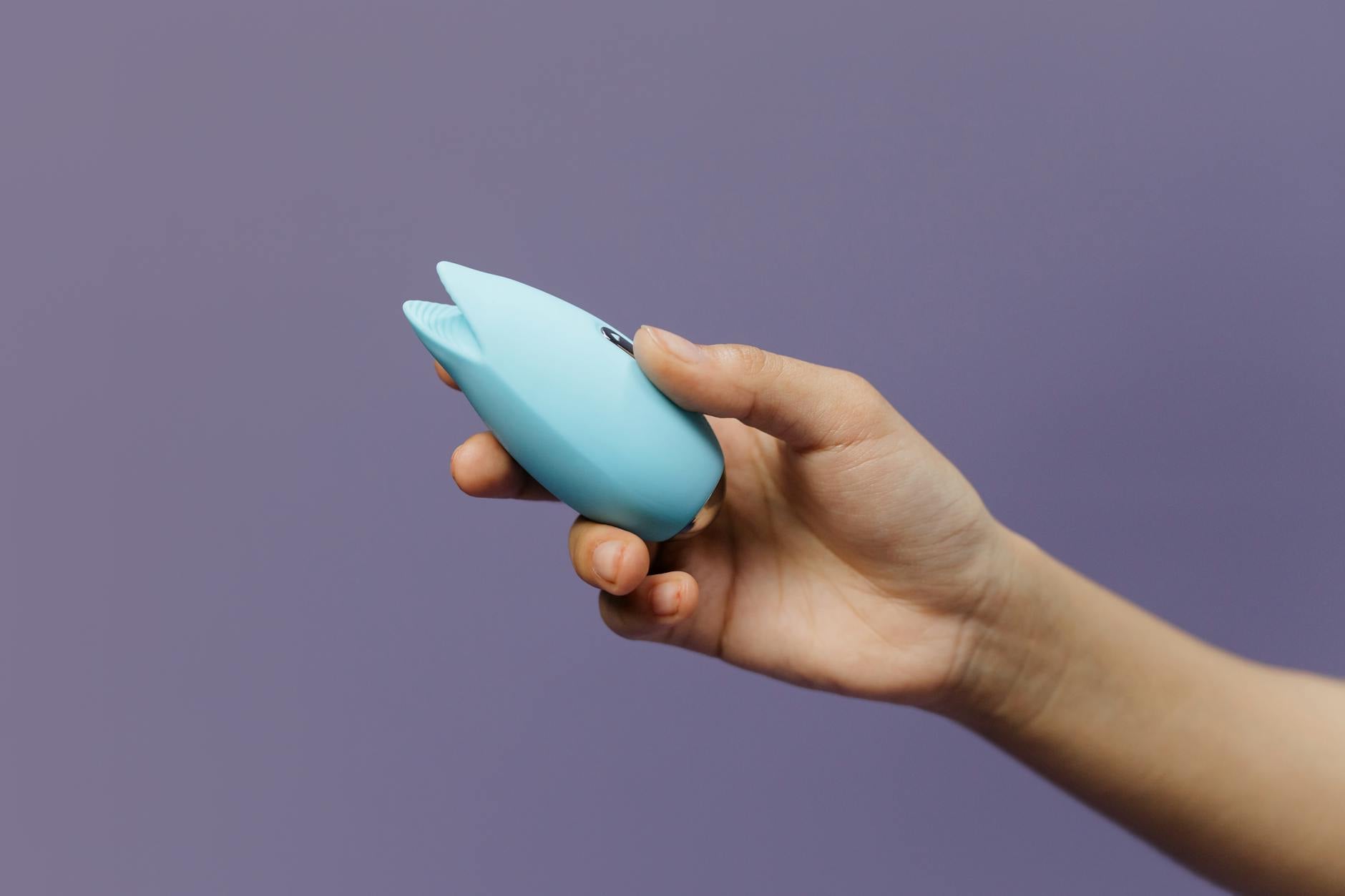
Photo by cottonbro studio on Pexels
What changes when they finally get it
Honestly? Everything softens. When a partner stops seeing a toy as a threat and starts seeing it as a tool you both benefit from, the sex usually gets better. You're more relaxed. You're more likely to come. You're more present. That presence is contagious.
Many partners tell me that introducing toys together actually made them feel more connected, not less. Because they had to talk about something real. They had to admit what they were afraid of. They had to choose each other again, this time with honesty.
The long game
Your partner's resistance isn't the real problem. It's a symptom. The real problem is usually that you haven't had a grounded conversation about what pleasure means to you both, and why you each react to it the way you do.
Start there. The toy is just the vehicle. The conversation is where the actual change happens.
People also ask
How do I bring up toys without making my partner feel inadequate?
Frame it as curiosity about your own body, not criticism of theirs. "I want to explore what feels good for me" is different from "you're not making me come." One is self-discovery. The other is blame. Lead with the first.
My partner thinks vibrators will desensitize me. Is that true?
No. Vibrators don't damage your nerve endings or make you unable to come without them. What they do is help you learn your own body faster, which usually makes partnered sex better, not worse. The brain doesn't forget how to respond to hands just because you've used a tool.
Should I hide my toy use if my partner doesn't want me to have toys?
That depends on what you're hiding and why. If you're hiding solo pleasure because of shame, that's worth examining together. If you're hiding a vibrator because your partner forbids all toys, that's a different conversation. You get to have a sexual life. Whether that happens solo or with a partner is your call, but it shouldn't require secrecy.
How long does it usually take for a resistant partner to come around?
It varies wildly. Some people shift in one conversation. Some need weeks or months. Some never do. There's no timeline. What matters is whether they're open to the conversation at all. Resistance that softens over time is different from resistance that's a hard boundary.
Can I use a lemon vibrator if my partner won't participate?
Absolutely. Your pleasure doesn't require permission. If your partner is resistant to toys but you want to use them solo, that's a choice you get to make. You can also explore pleasure separately and still have an intimate partnered sex life.
What if we try toys and they still don't enjoy them?
That's fair. Not everyone loves toys, and that doesn't mean anything is broken. But there's a difference between "I tried it and it's not for me" and "I won't let you use toys." One is a preference. The other is control. Make sure you know which one you're dealing with.