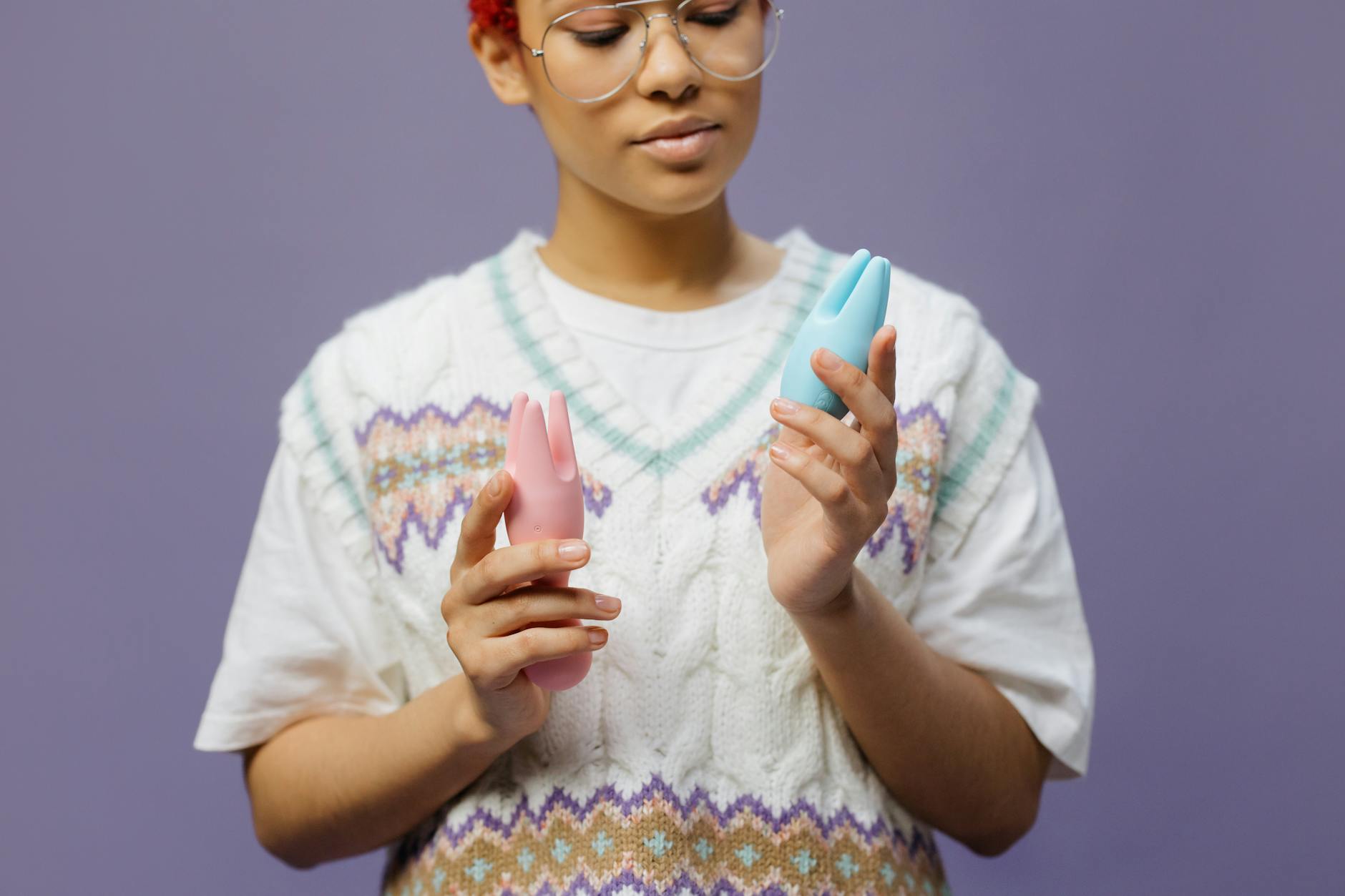
How Long Does It Take to Orgasm With Lemon Vibrators
Stop counting seconds and start listening to your body. Here's what the research says about vibrator timelines, why lemon vibrators shift the equation, and how to actually enjoy the experience instead of rushing it.
Let's be real: if you're searching for a specific number, you're probably anxious that something's wrong. It's not. But yes, lemon vibrators do shift the timeline, and there's actual science here that matters.
The short version: with a clitoral vibrator like the Lemon, most people orgasm somewhere between 2 and 10 minutes once things are already warmed up. That's faster than the 15-20 minute average without a vibrator. But that opening window—the warming up part—is where the real work happens, and rushing it defeats the entire point.
Your clitoris has 8,000 nerve endings concentrated in about a marble-sized area. A lemon vibrator delivers rapid, consistent stimulation directly to that zone in a way hands simply cannot match. The vibration pattern bypasses the slower ramp-up process that friction-based stimulation requires.
But speed isn't the same as quality. Speed is what a vibrator offers. Quality—that deeper, more integrated orgasm—requires what a vibrator can't provide: your own arousal.
Think of it this way: a vibrator is like a jump starter for your nervous system. It can jolt things to life much faster than manual stimulation. But the battery it's jumping has to be at least partially charged first. If you're stressed, distracted, or not actually interested, a lemon vibrator will feel like a buzzing stick regardless of how expensive or well-designed it is.
Five things that genuinely extend the timeline, and none of them are about the vibrator.
Mental clutter. Stress is the biggest factor. Your brain and your clit are connected through your nervous system. When you're anxious, at work, or managing relationship tension, your parasympathetic nervous system—the one that allows arousal—stays offline. A lemon vibrator can't override that. You have to.
Not enough foreplay beforehand. I don't mean from a partner. I mean any kind of sensory warm-up. If you go from scrolling your phone to using a vibrator, you're asking your body to accelerate from zero to sixty. That takes longer. Starting with thoughts, touch, or even just a few minutes of your own attention helps.
Dehydration and hormones. Lubrication isn't just physical comfort. It's a signal that your body is already responding. If tissues are dry, there's friction that requires more stimulation before the good sensations kick in. Hydration, where you are in your cycle, and how much estrogen you're carrying all matter. A water-based lubricant solves this in seconds.
Wrong pattern or intensity. The Lemon has multiple settings. Starting at the highest intensity feels like it should be faster, but it's actually the opposite. You numb out. Starting low and building creates a pathway in your nervous system. Counterintuitive, but real.
Pressure to finish. This is the biggest one. Orgasm is not the goal. Pleasure is. The moment you're watching for the finish line instead of feeling what's happening, your nervous system detects that performance mode and—surprise—it takes longer. It's like trying to fall asleep by concentrating on falling asleep.
Let me give you actual numbers based on what I hear from clients and what research shows.
Warm-up phase: 5-15 minutes. This is the part before the vibrator comes out. It's thinking about someone, reading something that gets you going, showering, taking off your clothes slowly, lying down, touching yourself without urgency. Your body is shifting into parasympathetic mode. Your clitoris is getting blood flow. Your breathing is changing.
Vibrator phase 1 (building arousal): 2-5 minutes. You turn on the Lemon at a low setting—say, pattern 1 or 2. You're not going for orgasm yet. You're noticing sensation, enjoying the vibration, maybe adjusting angle slightly. Your body is learning what this feels like.
Vibrator phase 2 (climbing): 2-8 minutes. You increase intensity gradually. Your breathing gets faster. You might add some pelvic floor movement. You're riding this wave, not chasing it. Your nervous system is signaling: "Yes, keep doing this."
Orgasm itself: 5-60 seconds. Once you're close, the actual orgasm is shockingly fast. It's the build that takes time, not the release.
Add those up: you're looking at 10-30 minutes total, most of which is the stuff that has nothing to do with the vibrator.
I mention lemon clitoral vibrators specifically because the suction mechanism works differently than a traditional vibrator. Instead of side-to-side or up-and-down friction, you're getting gentle suction that stimulates the nerves without the aggressive friction that can numb sensitive tissue.
For people with reduced sensitivity (whether that's from age, medication, or just how their body's wired), this changes everything. The timeline doesn't get shorter because you're using a Lemon instead of another clitoral vibrator. But it does get more reliable. You spend less time wondering if it's working and more time actually feeling it.
If you're in a relationship, you might be timing it because you're worried about taking too long, or you're anxious about your partner waiting. That's worth addressing directly, not with a faster vibrator.
Honestly though, if your partner is impatient about your orgasm, that's information about your dynamic that has nothing to do with lemon vibrators and everything to do with whether you actually feel desired. A vibrator can help you access pleasure more reliably, but it can't fix a relationship where you don't feel safe taking time.
If you're alone, you might be timing it because you're rushing, or because you've internalized that sex should be quick. It shouldn't. The most satisfying sessions are the ones where you forget what time it is.
When you use a lemon vibrator, notice when things shift. When does your breathing change? When do you feel that first flutter? When do you stop thinking about your to-do list? Those are the milestones that matter.
If you find yourself regularly unable to orgasm even with a vibrator after 20-30 minutes of genuine arousal and attention, that's worth discussing with a healthcare provider. It's not rare, it's usually fixable, and it's not a personal failing.
Is it normal for orgasm to take 15 minutes with a vibrator?
Completely normal. If the build-up is genuine arousal and not stress or numbness, 15 minutes is fine. Only worry if you're not actually enjoying the sensation or if it's something that started suddenly and feels wrong.
Why does it take longer with a vibrator when first using it?
Your body doesn't know what this sensation means yet. It takes a few sessions for your nervous system to recognize the pattern and respond reflexively. By session 3 or 4, most people notice a shift.
Can I make it faster by using a higher intensity immediately?
No. Higher intensity usually makes it longer because it's overwhelming rather than building. Start at setting 1 or 2, then increase gradually. That's faster overall.
Is there something wrong if I never orgasm with a vibrator?
Maybe, maybe not. Some people's nervous systems respond better to friction than suction. Some need a partner present. Some need more time than the lemon clitoral vibrator scenario allows. Talk to a sex-positive therapist if this is causing distress. It's usually solvable.
Does my timeline change if I use a lemon vibrator during ovulation versus other times?
Yes. During ovulation, your testosterone is higher and your tissues are more responsive. Things move faster. Right before your period, it might take longer because your nervous system is less sensitive. This is normal.
If I can't orgasm in under 5 minutes, am I broken?
Absolutely not. The idea that orgasm should be fast is mythology, not biology. The people you see in movies—or even in porn—are performing, not experiencing. Real pleasure takes time. Rushing it is like rushing a good meal.
Lemon vibrators don't work because they're magic. They work because your clitoris responds to specific types of stimulation, and they deliver it consistently. The timeline is personal, hormonal, and circumstantial. It's not a measure of whether you're normal or broken.
What matters is whether the experience feels good and whether you're present enough to notice. Put the clock away. That alone will likely cut your real timeline in half.