Let's be real about the first time
You've thought about it. Maybe you've researched lemon vibrators or clitoral vibrators more broadly. Maybe a partner suggested it, or you just want to explore on your own. And now you're standing at the threshold of actually doing it, and the questions feel enormous. What if it's too intense? What if I don't like it? What if I can't figure out how it works? What if nothing happens?
Here's the thing. Every single one of those questions is normal. And every single one of them has an answer that's actually pretty straightforward.
The setup matters more than you think
Before you even turn on your lemon vibrator, the environment counts. Not in a "rose petals and candles" way (though if that's your thing, go for it). I mean the practical stuff.
Clear some time. Not rushed, not "I have 20 minutes before my partner gets home" time. Thirty to forty-five minutes, minimum. You're not just making space for the thing itself. You're making space to warm up, explore, figure out what feels good, and then maybe do it again if the mood strikes.
Privacy matters. If you live alone, lock the door anyway. It sounds paranoid, but the mental load of worrying about interruption will kill the experience faster than anything else. If you share space, find actual alone time. Bathroom, bedroom with a lock, during an hour when you know you won't be disturbed. Your brain needs to believe you're truly safe before your body can relax enough to feel anything.
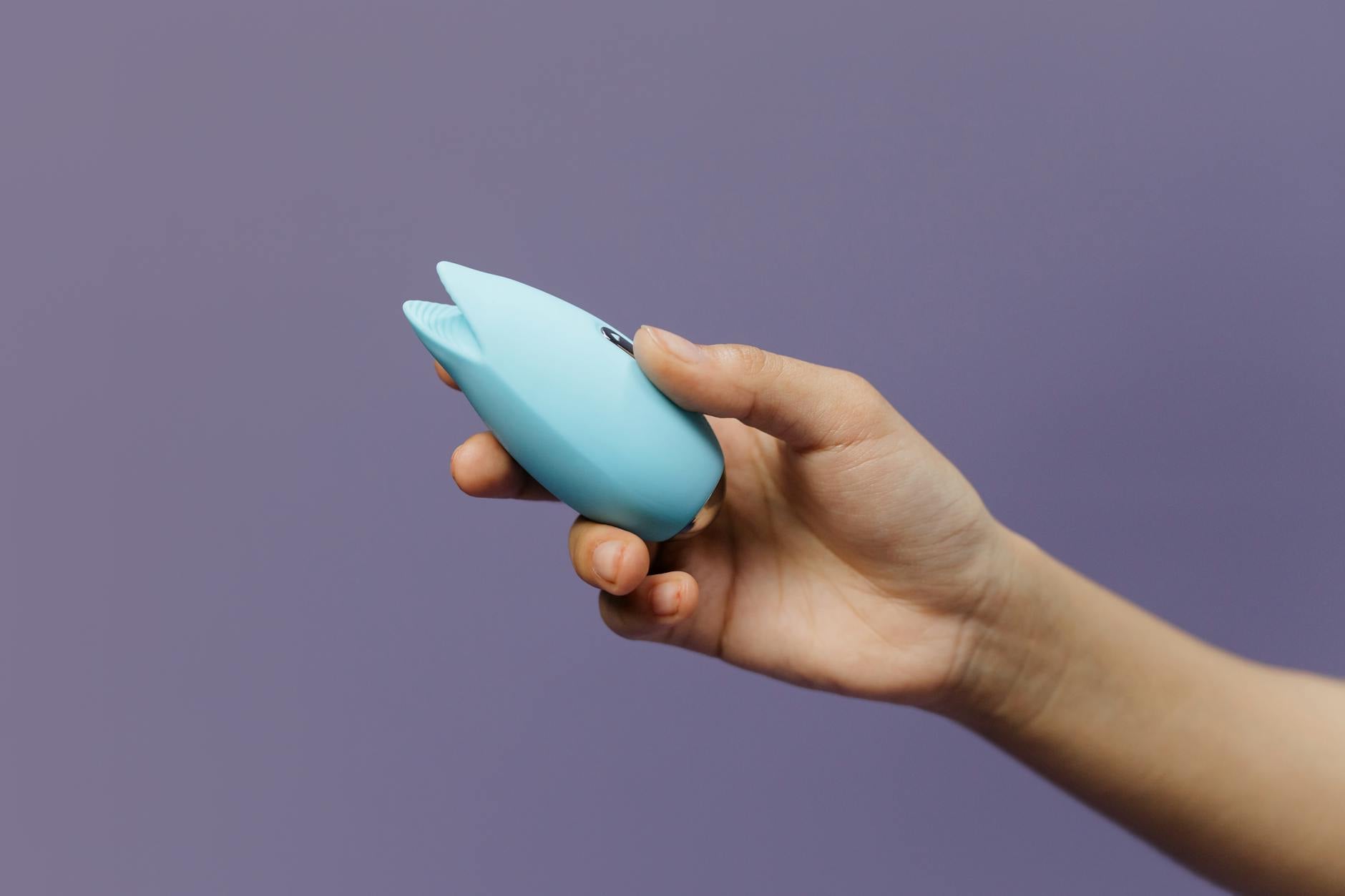
Have lubricant nearby. This is not optional. Even if you think you don't need it, grab it. Water-based lube works best with most silicone vibrators, and it makes everything feel better. The lemon sucker design of devices like the Lem works through gentle suction as much as vibration, and a little slickness means the seal is more comfortable and the sensation is smoother.
Understanding intensity before you press the button
One of the biggest reasons people have a mediocre first experience is that they start on the highest setting and either hate it or give up when it's overwhelming.
Most lemon clitoral vibrators have three to five intensity levels. If you're using a lemon sucker device, start at pattern 1 or 2. I mean actually start there. Not "let me just see what the highest one is." Start low.
The sensation builds. Your body warms up. The tissue becomes more sensitive and responsive. If you start at full blast, you're basically doing the equivalent of jumping into cold water and then wondering why it didn't feel amazing. Your nervous system needs the ramp.
With a device like the Lem vibrator, level 1 or 2 creates a gentle, pulsing suction. You might think nothing is happening. That's when you wait. Thirty seconds. Sixty seconds. Let your body register the sensation. Most people find that after a minute of gentle stimulation, the pleasure starts to compound.
If it feels good at a low level, you can move up. If it starts to feel too intense at any point, go back down. There is no "power through it" rule in pleasure. Backing off is smart, not quitting.
The warm-up is where the magic happens
Clitoral tissue needs arousal to respond fully. This is not mysterious. It's anatomy.
Before you even touch yourself with a vibrator, spend five to ten minutes just warming up. This could be fantasy, porn you like, a text conversation with someone you're attracted to, memories, whatever gets your blood moving. The point is to arrive at the vibrator already slightly turned on. Your body will be more sensitive, responses will be faster, and the whole experience will feel more intuitive.
When you do apply the vibrator, start over the clitoris directly if that feels good. Some people prefer to start slightly off to the side, where the tissue is a bit less sensitive. Some people want it through clothing first, which softens the sensation. All of these are valid starting points. The clitoral vibrator doesn't care. Your comfort does.
What actually happens (and what doesn't)
If you've never had an orgasm, the first time with a lemon vibrator might not produce one. That's completely normal and does not mean anything is wrong. Orgasm is a complex response that involves physical sensation, mental focus, nervous system activation, and sometimes luck. A vibrator is a tool that makes one piece of that easier. It doesn't guarantee the outcome.
You might feel pleasure without orgasm. That alone is valuable. You might feel nothing the first time and something different the second time. Your body gets information about what it likes through repetition, not single trials. You're learning, not performing.
If you do orgasm, you might be surprised by how it feels compared to other methods you've tried. Some people find that clitoral vibrators produce more concentrated, faster orgasms. Others find the sensation almost meditative once they get past the learning curve.
None of these outcomes are wrong. The first time is data collection, not the final word on whether this tool works for you.
Solo exploration is different from partnered use
If you're starting alone, you have complete freedom to explore. No performance pressure, no judgment, no need to communicate. You can pause when you want, take breaks, try different patterns, and move at your own pace.
If you're considering using a lemon vibrator with a partner, that's a slightly different conversation. The device doesn't replace your partner's touch. It's something you might use together to discover what feels good, to build arousal faster, or to reach orgasm if that's been difficult. The key is that you get to decide where and how it's involved.
Many couples find that introducing a vibrator removes pressure from the partnered experience, because suddenly pleasure isn't solely dependent on one person's technique or stamina. It becomes collaborative. That shift often makes sex feel better for both people.
Cleaning and storage keep things simple
After you use a lemon adult toy, wash it with warm soapy water or a toy cleaner. Dry it thoroughly. Store it somewhere safe and discreet. That's it.
This matters because if the cleanup feels complicated, you'll use the device less. Simplify the process and you're more likely to actually reach for it again. Which brings us to the real truth about vibrators: they work best when you use them consistently enough to figure out what you actually like.
When sensations don't match the hype
You might try a lemon vibrator and feel underwhelmed. Maybe it's not intense enough. Maybe it feels weird. Maybe nothing much happens.
That doesn't mean vibrators aren't for you. It might mean the intensity level is wrong, or you need more warm-up time, or this particular design doesn't suit your body. Different lemon sexual toys have different feels. Some focus on broad vibration, others on precision suction, others on specific pulse patterns. The first one you try might not be the one that clicks.
It also might mean that right now, in your body and life, vibrators just aren't calling to you. That's also completely fine. Pleasure has many paths. A vibrator is one option, not the only option.
The goal is to eliminate pressure and curiosity about how it actually works. Once you know, you get to decide if you want to keep exploring or move on to something else.
Building confidence over time
The first time you use a lemon clitoral vibrator, you're essentially learning a new physical skill. Your body is figuring out what sensation goes with what setting. Your mind is learning to stay present. Your nervous system is calming down enough to feel pleasure instead of just curiosity.
All of this takes repetition. Most people find that the third or fourth time they use a vibrator is noticeably different from the first. More relaxed. More responsive. More fun.
Give yourself permission to be a beginner. You're not supposed to be an expert. You're supposed to be curious and willing to pay attention to what your body tells you. That's actually all the expertise you need.
FAQs on starting with lemon vibrators
How do I know if I'm using it wrong?
If you're uncomfortable or it doesn't feel good, you're using it in a way that doesn't work for your body right now. Lower the intensity. Try a different angle. Add more lubrication. Take a break and try again later. There's no wrong way except the way that's causing pain or genuine distress. Your comfort is the only metric that matters.
Can I hurt myself with a lemon vibrator?
Not really. Vibrators are pretty safe devices. The main caution is that if you experience pain, stop and check in with yourself. Occasional pinching or mild discomfort as you're adjusting the angle is normal. Sharp pain or persistent discomfort is a signal to pause. If pain continues after you've adjusted your technique and tried different intensities, mention it to a healthcare provider. It's rarely a problem with the device itself.
What if my partner judges me for using a vibrator?
That's a separate conversation from learning to use one. If you're in a partnered relationship where your pleasure feels unsafe or judged, that's about the relationship, not about the vibrator. Many people find that once they've explored solo, they feel more confident bringing it into partnered space. But you don't have to. Your body, your timeline, your choices.
How often should I use a lemon vibrator?
As often as you want. There's no "correct" frequency. Some people use vibrators daily, some weekly, some monthly. Your body isn't going to build up immunity or desensitize in some permanent way. If you feel like sensation is becoming less intense, taking a break for a few days usually resets that. The goal is pleasure, not routine.
Will using a lemon vibrator change my ability to orgasm without one?
No. Your body remains fully capable of responding to all kinds of stimulation. Vibrators are an addition, not a replacement for other ways of experiencing pleasure. Some people find that learning what feels good with a vibrator actually makes it easier to orgasm without one, because they've figured out what type of stimulation works for their body.
Should I tell my partner I'm thinking about using a vibrator?
That depends on your relationship and what feels right to you. Some people explore solo first and never mention it. Others want to be transparent from the start. Neither approach is wrong. If you do decide to talk about it, lead with curiosity and pleasure, not apology or defensiveness. "I've been thinking about exploring this" is different from "I need this because you're not enough." The framing shapes the whole conversation.
The permission you actually need
Here's what I'd tell you if we were having this conversation in my office. Your pleasure is worth exploring. A lemon vibrator is a tool that might help you understand your body better, reach orgasm more reliably, or just feel good for twenty minutes. It might not click for you. Either way, the fact that you're curious enough to research it is already permission to try.
Your body isn't broken if you need a vibrator to orgasm. Your desire isn't shameful. You're not cheating on anyone. You're not weird. You're a person learning what feels good, which is actually one of the most basic and important things you can do for yourself.
Start slow. Be patient. Pay attention. And remember that the whole point is that it should feel good. If something feels off, adjust it. Your comfort is not negotiable.